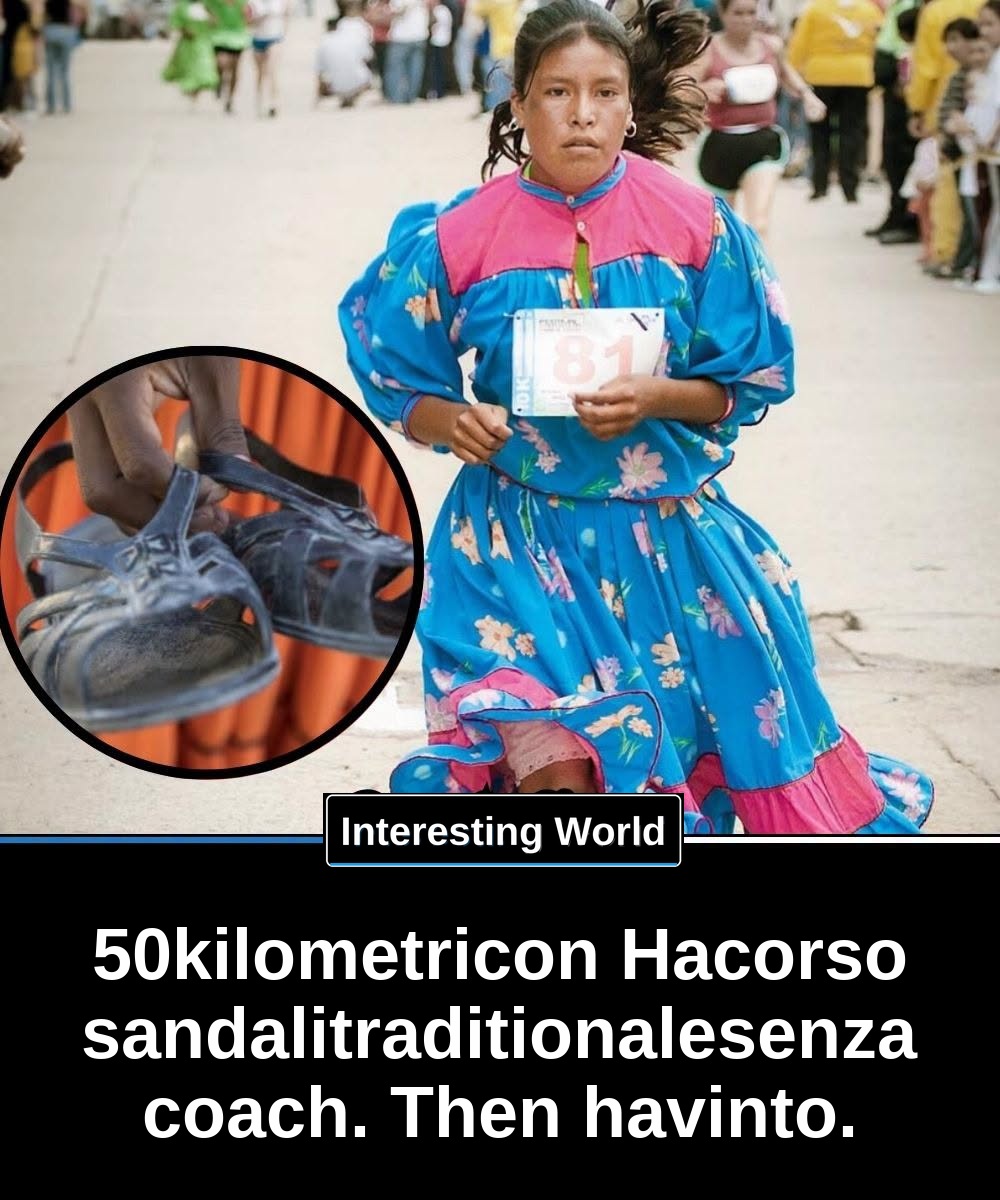
In front of her there were hundreds of athletes. Technical shoes, specialized equipment and months of preparation. Lorena Ramírez showed up with her traditional dress and a pair of sandals. Then he ran for 50 kilometers and won the female test.
It was 2017.
Lorena belongs to the rarámuri people and comes from the Sierra Tarahumara, in the Mexican state of Chihuahua.
His everyday life was far from the training programs of ultramarathonists.
He took care of the cattle and usedly traveled kilometers between the paths and the rough landscapes of his land.
No personal coach.
No tech racing shoes.
No sophisticated ultra marathon equipment.
When he participated in the UltraTrail Cerro Rojo, in Tlatlauquitepec, in the state of Puebla, he ran as he was accustomed to doing.
He wore his traditional dress and the huaraches, the characteristic sandals with rubber soles.
The race was 50 kilometers.
Lorena finished it in about 7 hours and 3 minutes.
And he won the female test.
The images of that young woman who ran into the mountains with a colorful dress and simple sandals made the world round.
But to really understand his story you have to look beyond that victory.
The rarámuri of the Sierra Tarahumara have also become famous for their long distance racing tradition.
Their name is often associated with the idea of "light feet", although the origin and meaning of the term are more complex than this simple translation.
In rarámuri communities, walking and running for long distances through a territory made of mountains and canyons have played an important role in everyday life and traditions.
Lorraine had transformed that familiarity with the territory into something that many observers, accustomed to modern sport, found surprising.
After that victory other competitions arrived, even outside Mexico.
He rushed to places far from the Sierra Tarahumara, bringing with him something immediately recognizable: his traditional clothing and his rarámuri identity.
But perhaps the most important part of his story is not even a milestone.
It concerns what it represents.
Lorena Ramírez has shown the world that preparation and resistance can also be born from experiences very different from those of professional sport and that it is not necessary to give up your identity to compete.
That day of 2017 many saw a woman running 50 kilometers with sandals.
But behind those sandals there were years of paths, crossed mountains and a culture in which moving for great distances has deep roots.
The most sophisticated shoes can help you run.
But no shoe can give you the strength in your legs, the strength and determination necessary to get to the bottom.
Those, Lorena, she already had them.

In front of her there were hundreds of athletes. Technical shoes, specialized equipment and months of preparation. Loren
Category: Life Stories