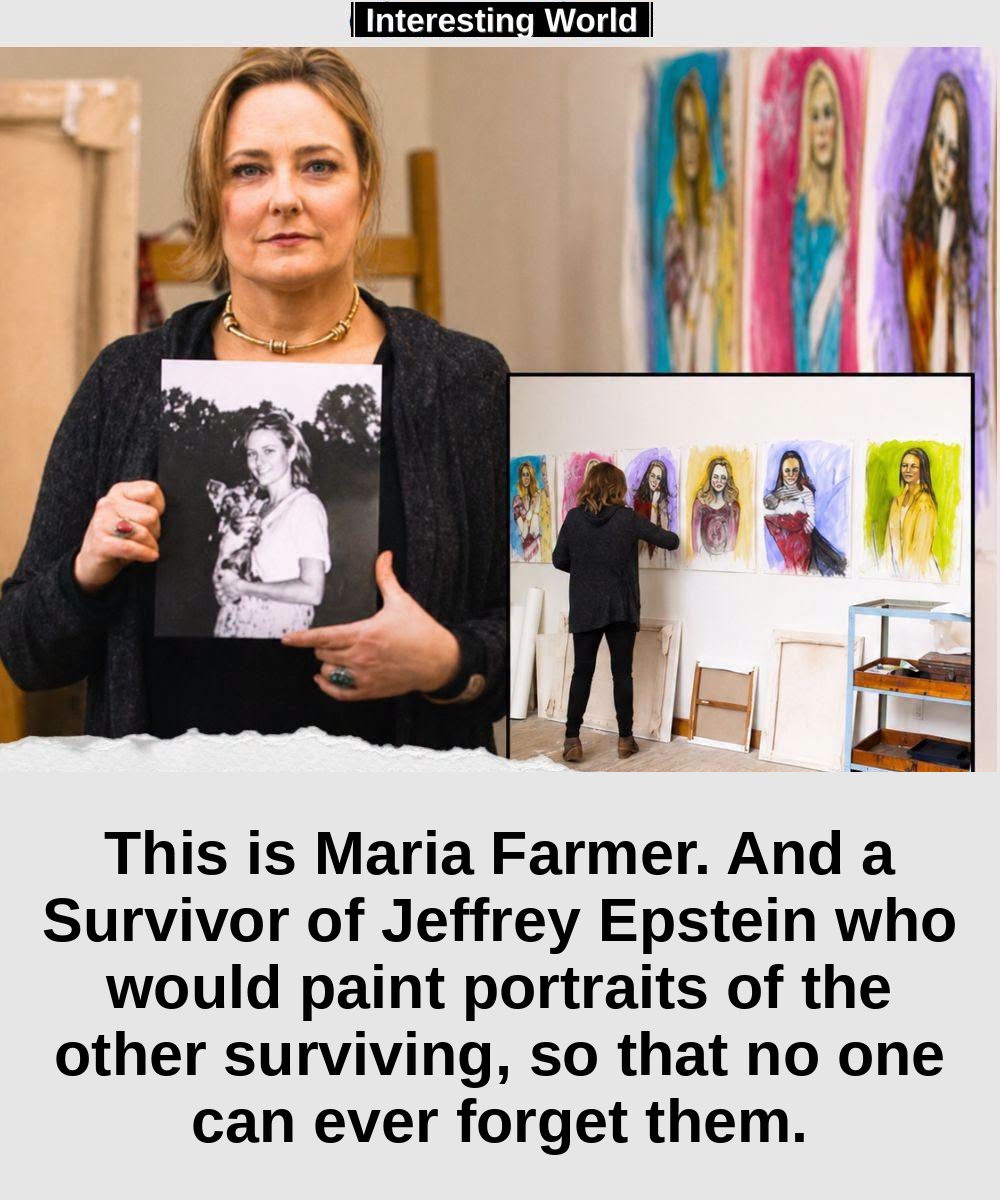
Maria Farmer couldn't paint for years. Then she came back in front of a stand with a precise goal: portraying other survivors and giving them an image that was not defined by the abuses suffered.
Farmer is an artist and was among the women who publicly denounced the abuses related to Jeffrey Epstein.
For her, the consequences of that experience also invaded the space that until then belonged to creativity.
He told me he completely stopped painting because of what he had lived.
For an artist it means losing something that goes beyond work.
It means seeing one of the ways through which the world has always been told and, in part, oneself.
A long time later, however, Maria managed to return to the easel.
He has started using soft pastels and choosing as subjects just others survived similar traumatic experiences.
In his portraits he tries to focus their individuality, their strength and their humanity.
Not what someone did to them.
Farmer explained this paradox with very simple words: Epstein had been the reason he had stopped painting, but indirectly he also became part of the reason he had started again, because he wanted to pay tribute to the victims.
And this is where his story takes on a different meaning.
Returning to create does not erase what happened and a work of art cannot replace justice.
But it can allow a person to reappropriate a space that the trauma had occupied for years.
Today, when Maria Farmer draws a face, the center of the work is not the man who caused so much suffering.
It's the people who survived.
Perhaps this is the most powerful gesture of his portraits: to remember that a victim has an identity, a history and an infinitely greater future than he has suffered.

Maria Farmer couldn't paint for years. Then she came back in front of a stand with a precise goal: portraying other surv
Category: Life Stories