After five days trapped in a canyon, Aron Ralston engraved his name on the rock, the date of birth and what he thought would be the date of his death.
He was convinced that those words would become his epitaph.
On April 26, 2003, Ralston was 27 and was exploring the Bluejohn Canyon in Utah.
He was an experienced climber, accustomed to isolated environments. But that time he made a mistake that would make everything much more dangerous: he did not tell anyone precisely where he was going.
As he crossed a narrow stretch of the canyon, a huge rock rushed and blocked his right arm against the wall.
Ralston provided every solution he had.
He tried to move the rock.
He built carbide systems using ropes and climbing equipment.
He even tried to hack the rock with the small multipurpose tool that he carried with him.
Nothing.
The stone didn't move.
They spent hours, then the days.
Food ended and water became increasingly poor.
The situation was made even more dramatic by a certainty: no one knew where to look for it.
With a video camera, Ralston began recording messages for the family.
He spoke to his parents and sister.
He was ready to say goodbye for the last time.
Then he recorded that three information on the canyon wall.
He had accepted the idea of dying there.
During the last night, debilitated and severely dehydrated, he reported after having had a vision that changed his way of looking at the hours that waited for him.
He saw himself in the future.
He was missing part of his right arm, but he was playing with a child.
Ralston interpreted that image as the concrete sign that there could still be a future beyond that rock.
The next morning he made an extreme decision.
He knew he could use his body's weight to fracture the bones of his arm trapped.
Then, using the small blade of his tool, he managed to amputate his right arm under the elbow.
It's been 127 hours.
But getting rid of the rock didn't mean being saved.
He still had to get out of the canyon.
With only one arm he faced a double rope descent of about twenty meters and began to walk in the desert, debilitated by dehydration and blood loss.
He eventually met a family of Dutch hikers.
They gave him water and managed to get help.
Shortly after a helicopter took him to the hospital.
For many people a similar experience would mean the final end of the relationship with the mountain.
Ralston wasn't like that.
With a prosthesis he went back to climbing and continued to pursue extremely challenging mountaineering objectives. He also completed his project to climb all the peaks of Colorado above 14,000 feet in winter.
He learned the experience in the book Between a Rock and a Hard Place.
Years after that story would also become the heart of the film 127 Hours.
But there is a detail of its history that makes even more particular the memory of that night in the canyon.
In 2010, Ralston became a father.
Seven years earlier, dehydrated and convinced that he was near death, told that he had imagined without part of his arm while playing with a child.
We cannot know what really happened in his mind in those extreme hours. But we know what Ralston meant to attribute to that image: he returned something he thought he had lost.
A future.
On that wall of Utah the date on which he thought his life would end.
She was wrong.
It wasn't the end of his story.
It was the exact point from which he should learn to live a completely different story.

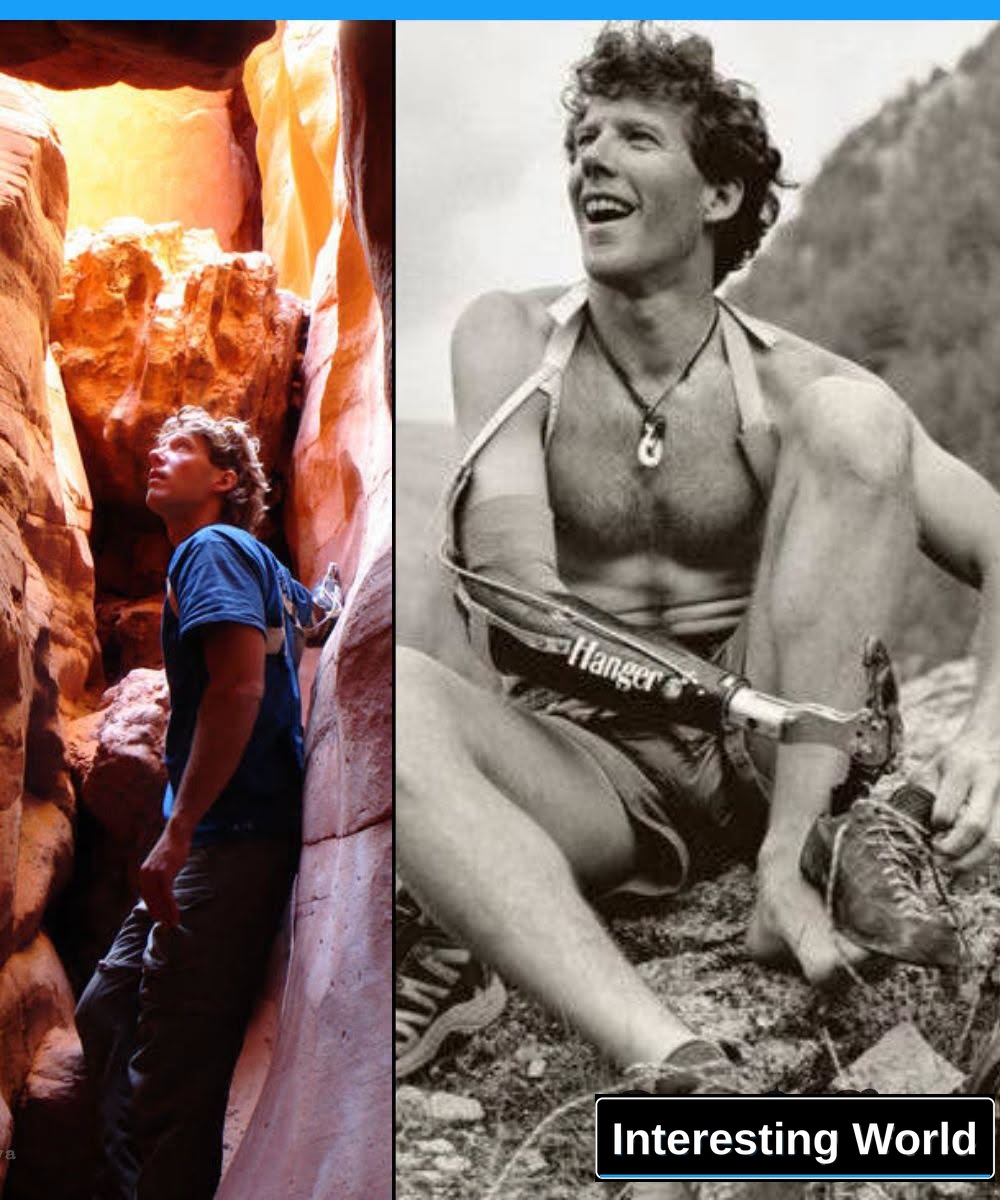
After five days trapped in a canyon, Aron Ralston engraved his name on the rock, the date of birth and what he thought w
Category: Life Stories