When it reached hard rock, there was no trace of water. Gowri could have stopped. Instead he took his tools and continued to dig.
Gowri Chandrashekar Naik, a farmer of Karnataka, in India, had a concrete problem: without water, its cultivations of areca and bananas were in difficulty.
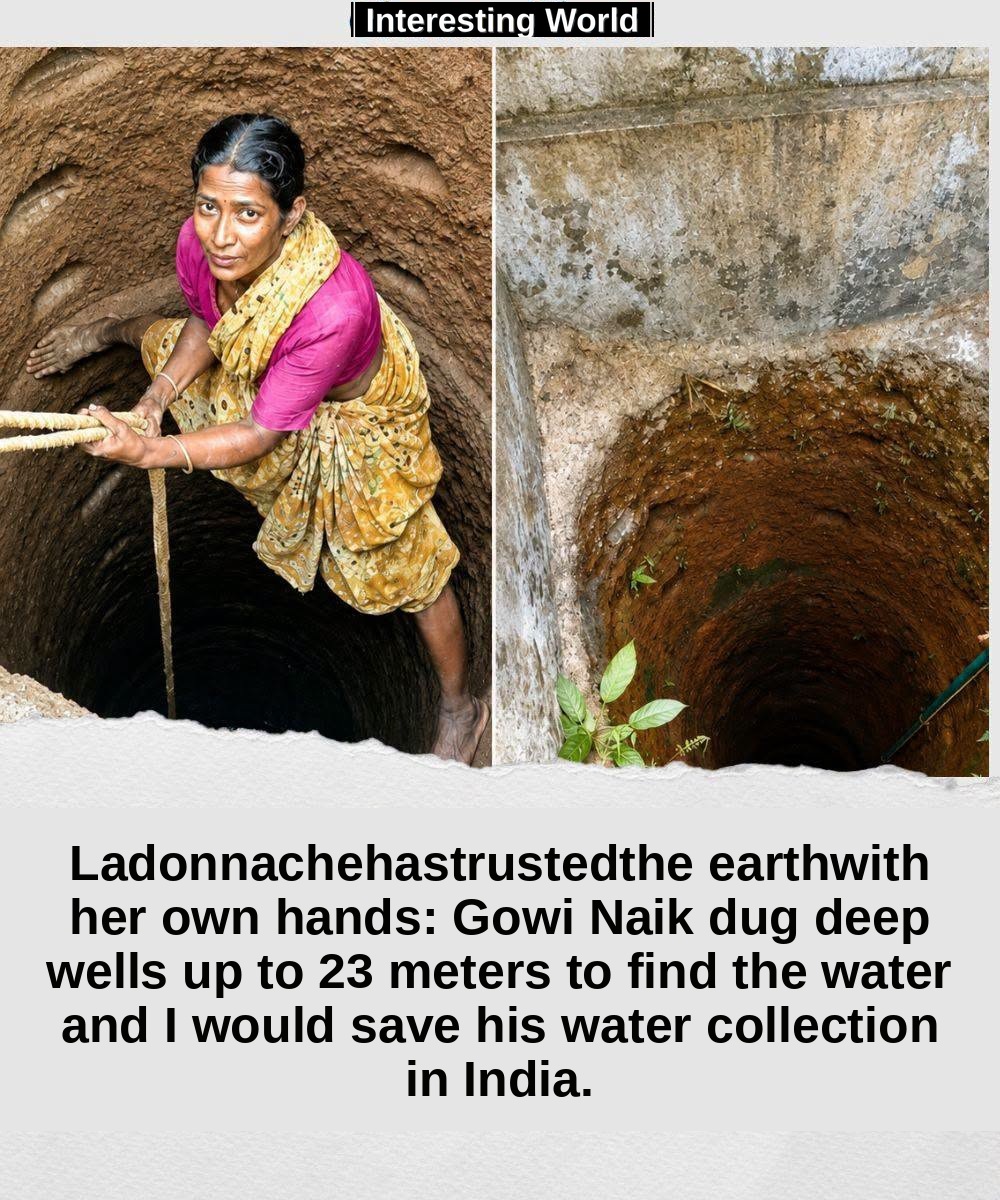
He didn't have big machinery available. With simple tools, buckets, ropes and a carbide, he decided to search for water almost completely by himself.
Between 2017 and 2018, day after day, he went deeper and deeper.
At about 12 meters he met hard rock layers. It reached about 18 meters and there was no trace of water.
It's been months of work.
And yet he continued.
Metro after meter reached deeper layers, until the soil finally began to show signs of moisture.
Then came the underground water.
Gowri continued to work until he took the well to a depth of almost 75 feet, i.e. just under 23 meters.
But there was no isolated venture.
In the following years he continued to dig other wells by hand. In 2024 he began to make one at an Anganwadi center of his community, where the availability of water was a daily problem.
Even in that case his work had a concrete purpose: to make water more easily accessible to the community.
In 2025 the local media then told the story of its fourth well, hand dug to reach the water about 30 feet deep.
What had begun as an attempt to find the water necessary for its crops had thus assumed a greater meaning.
The media and inhabitants of the area began to call it “Lady Bhagiratha”.
The nickname recalls Bhagiratha, a figure of the Indian tradition associated with the descent of the Ganges on Earth.
Gowri had told that one of his greatest fears was to continue digging without finding water.
But he continued.
Sometimes perseverance is told as an abstract concept.
In its case it can be measured: almost 23 meters below ground.

When it reached hard rock, there was no trace of water. Gowri could have stopped. Instead he took his tools and continue
Category: Life Stories