His hand is on the door handle. It's raining outside. Just open that door, get off the car and choose another life. But Francesca remains still. And it is in those few seconds that Madison's bridges tell almost everything there is to know about love and the opportunities that no longer return.
Released in 1995 and directed by Clint Eastwood, the film builds its strength around a seemingly simple story.
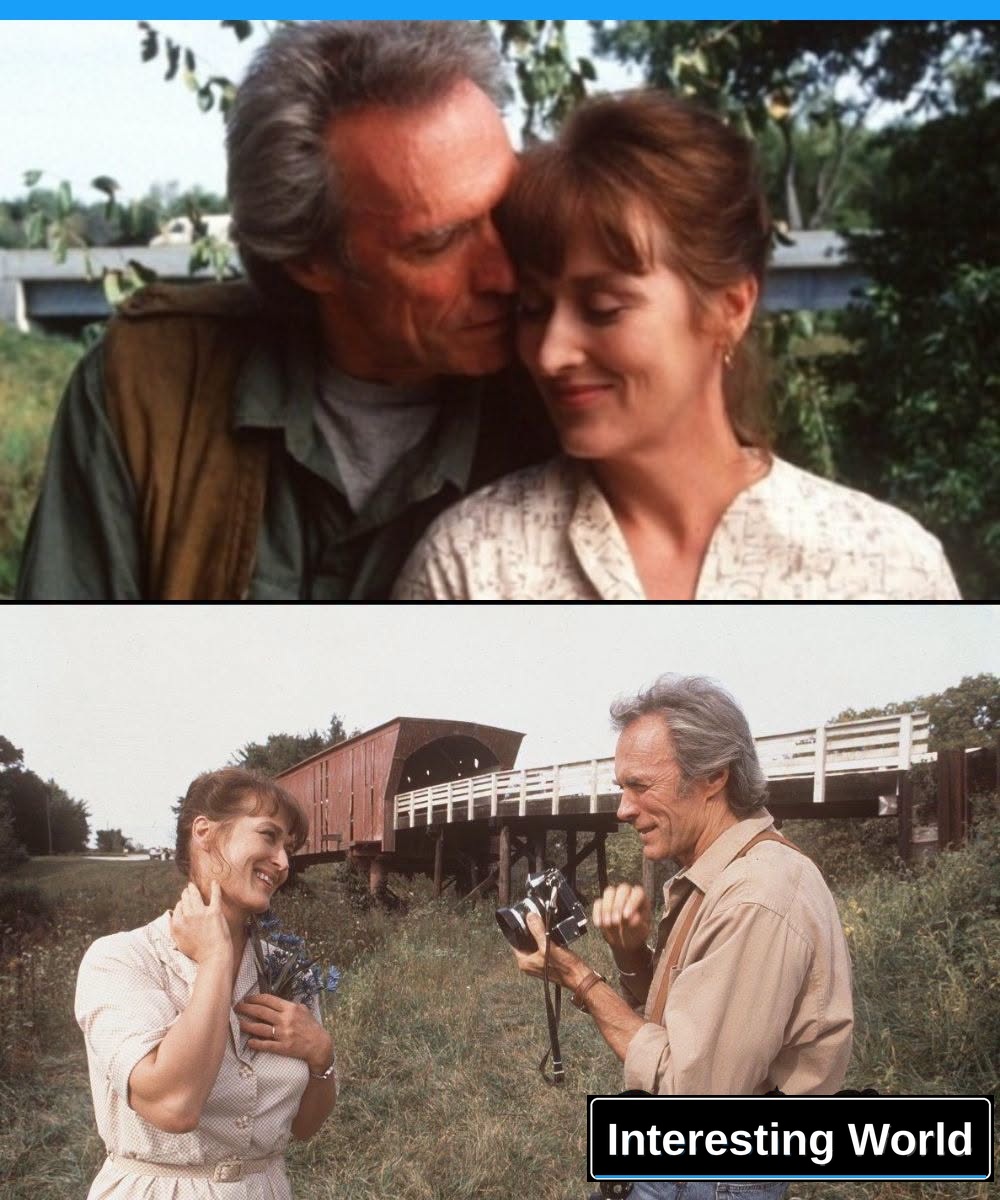
Francesca Johnson, played by Meryl Streep, lives in the Iowa campaign. She is a wife, mother and a woman accustomed to a daily life of responsibility, family and gestures always equal.
Then Robert Kincaid arrives.
He is a National Geographic photographer, portrayed by Eastwood himself, who arrived in the area to photograph the covered bridges of Madison County.
The meeting only lasts four days.
Four sufficient days, however, to question an entire existence.
Between Francesca and Robert does not explode the noisy passion typical of many romantic stories. Eastwood chooses a more difficult road: let silences, looks, hesitations and small gestures tell what is happening.
Because Francesca is not simply a woman who falls in love.
She is a woman who suddenly rediscovers a part of herself for years hidden behind the roles of wife and mother.
Robert represents the possibility of a different life.
But choosing that life would mean abandoning another.
This is where Meryl Streep offers one of the most intense interpretations of his career, awarded with an Oscar nomination.
Francesca wants to leave.
She wants to stay.
He loves Robert.
He also loves the family he built.
There is no choice without loss.
Then that scene comes.
Rain falls on the windshield. Francesca is by car with her husband. Not far away is Robert.
The hand slowly reaches the door handle.
For a few moments it seems possible to open it.
The viewer knows that, if he does, he will not simply descend from a car: he will abandon a life to finally enter another.
But that door doesn't open.
And that's probably why, more than thirty years after his release, Madison's bridges continue to hit so deeply.
He does not only tell an impossible love.
It tells something much more uncomfortable: there are meetings that can change even when we choose not to follow them.
Francesca returns to her life, but does not return to being the woman she was before she met Robert.
Because some love stories last a lifetime.
Others last four days.
And sometimes they're just the ones we didn't choose to stay with us forever.

His hand is on the door handle. It's raining outside. Just open that door, get off the car and choose another life. But
Category: Life Stories