He had a wife, a small daughter and a life to lose.
He would have just obeyed and continued to do his job.
Instead, he used that job to save hundreds of people from the Holocaust.
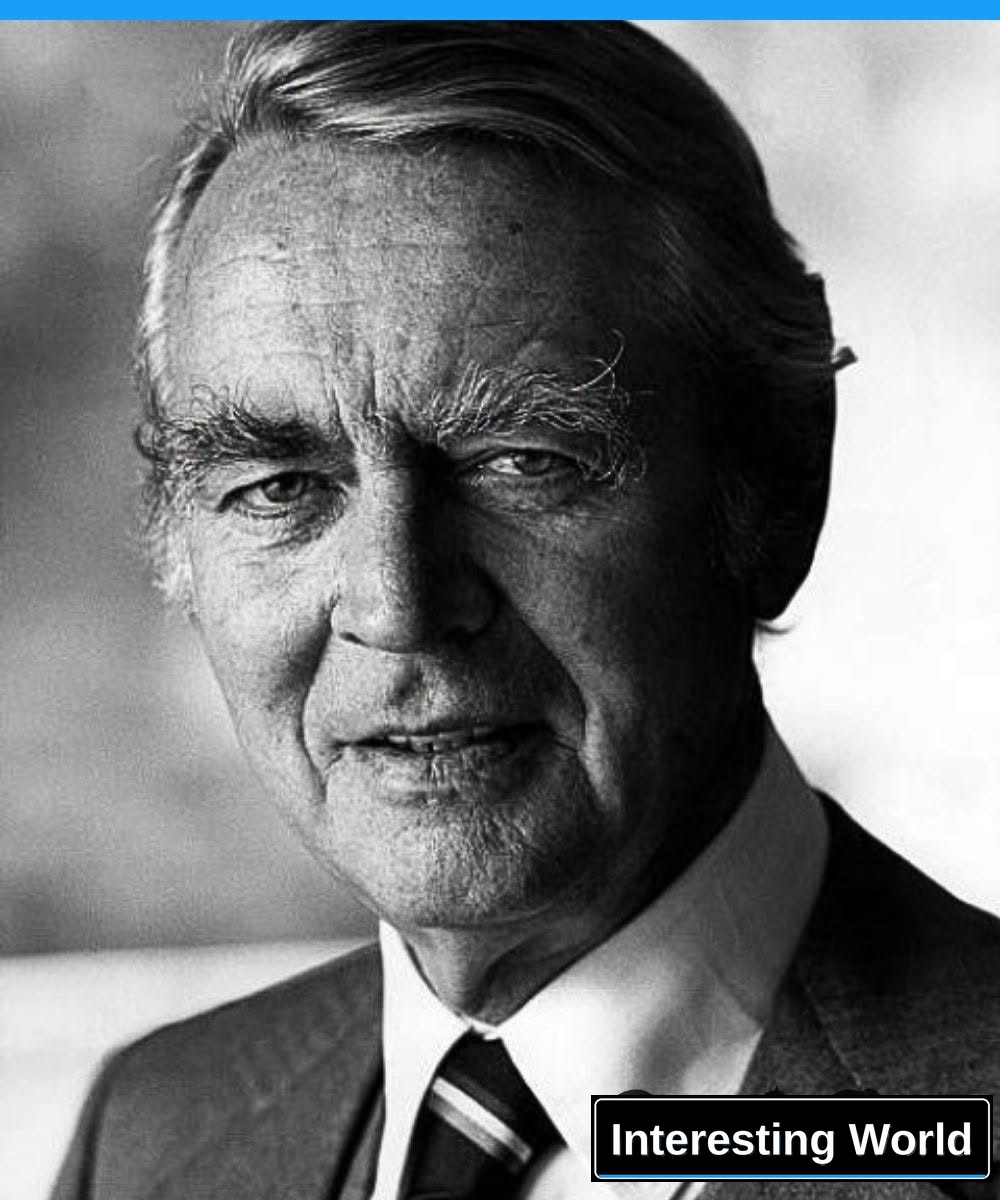
Berthold Beitz was 28 years old and was a young German executive in charge of administering oil fields in the Borysław area, Poland occupied by the Nazis.
On August 7, 1942 he saw something that changed his way of living that war: the SS were emptying a Jewish orphanage and loading the children on trucks destined for deportations.
That night he returned home and spoke with his wife Else.
From that moment on, their life changed.
Beitz understood that his position offered him a margin of action. Oil production was strategic and workers considered indispensable could obtain temporary protection from deportations.
So he began to transform that bureaucracy into a tool of salvation.
People who had no real specialization in oil fields were declared essential workers. A tailor, a barber or a scholar could suddenly appear on the documents as technicians needed for production.
Behind those qualifications there was something much more important than a job: there was a chance to stay alive.
Beitz also arrived at the station during deportations. He entered the wagons, identified some people and argued that they were indispensable to the oil fields, thus trying to get them off the trains.
Every intervention meant exposure.
And the risk wasn't just him.
Else participated directly in that choice. Their house became a place to hide Jewish children, arranged in attics, cellars and secluded rooms while around they continued checks and rafts.
A search could have condemned everyone.
In 1943 the danger became concrete: the Gestapo found false documents bearing the signature of Beitz.
He was questioned and threatened, but he managed to avoid arrest also thanks to the strategic importance of his position in the oil industry.
He could have considered it a definitive warning.
He continued to help other people.
At the end of the war, about 800 men, women and children had survived through actions attributed to Berthold and Else Beitz.
The meaning of that number, however, goes beyond 1945.
Each saved person had the opportunity to continue their own history, build a family, have children and grandchildren.
A decision taken during the Holocaust years continued to produce consequences for generations.
After the conflict, Berthold Beitz built a career that led him to become one of Germany's most influential industrialists.
Yet what he had done during the war remained a part of his life which he spoke with great discretion.
Israel recognized Berthold and Else Beitz as Justin among the Nations, the recognition reserved for non-Jews who risked their lives to save Jews during the Holocaust.
Berthold died on July 30, 2013, just before 100 years.
His story preserves a particular force because it does not begin with a man endowed with extraordinary powers.
It begins with a young executive who owned something much more common: a position, documents, a signature and the possibility to choose how to use them.
In a system built to transform human beings into numbers, he used bureaucracy to make the opposite path.
Behind a name on a sheet he continued to see a life.

He had a wife, a small daughter and a life to lose.
Category: Life Stories