For years, too many people have looked at Down syndrome thinking first of limits and only after possibilities.
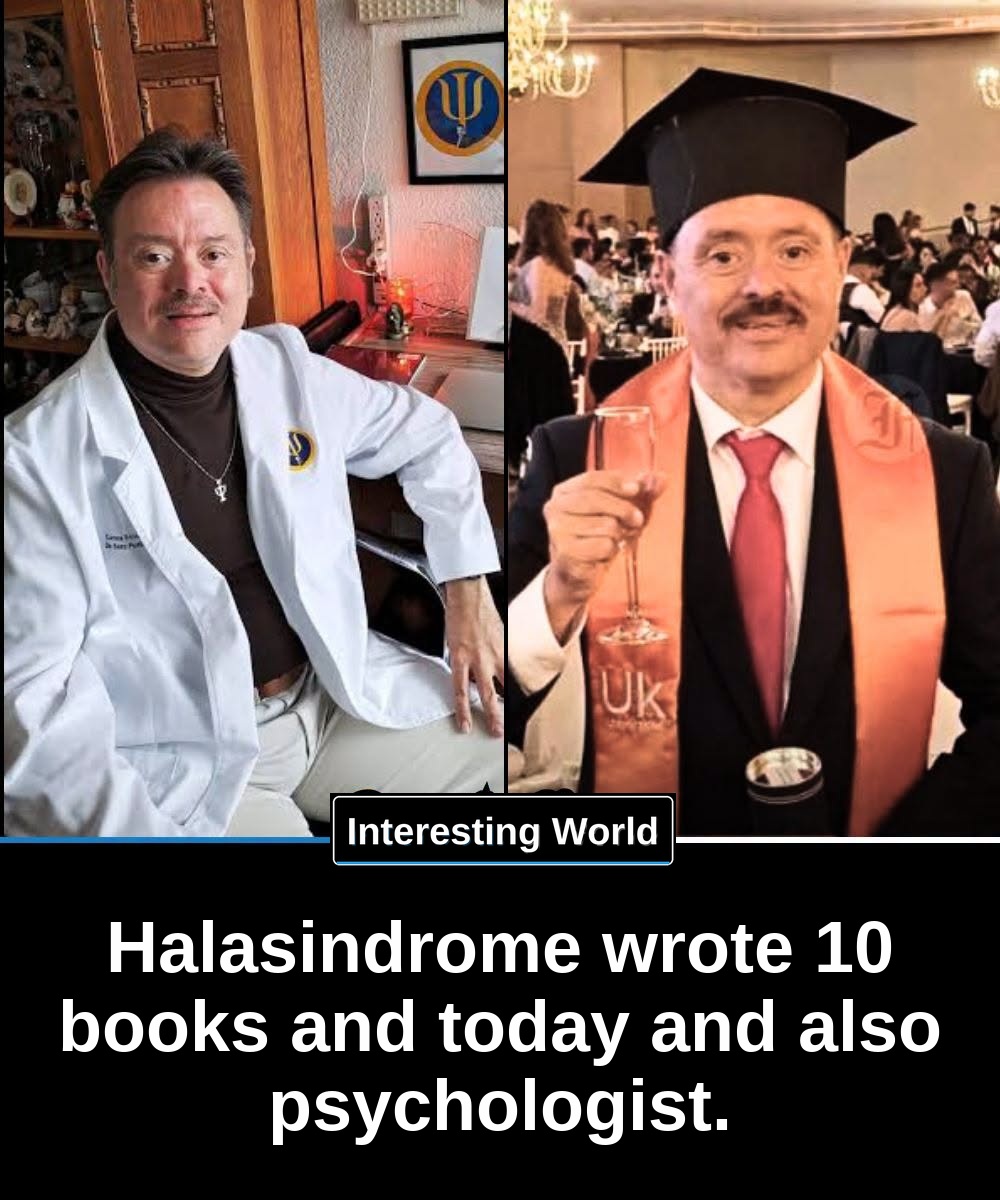
The story of Carlos Enrique de Saro Puebla shows how reductive this perspective can be.
Carlos was born in Mexico with Down syndrome. From the beginning, however, his family chose to accompany him on his path without letting a diagnosis establish in advance everything he could or could not have done.
Family support played a key role.
Carlos grew up facing an educational path made of difficulties, patience and achievements that did not come all together.
He learned to read and write.
And just writing, over the years, has become one of the most important parts of his life.
Carlos began to put thoughts, experiences and reflections on paper.
Then those pages became books.
The first was called Luchando against adversidad.
He wouldn't be the only one.
In the years Carlos continued to write until he published ten books, building parallel a path as author and lecturer.
But he didn't stop at writing.
He kept studying.
As a boy he was talking about the desire to continue his education and get to university.
Psychological choice.
A goal that required years of lessons, exams, study and perseverance.
In 2026, the route reached an important milestone: Carlos graduated in psychology.
Ten books.
Conferences.
A completed university course.
Numbers and titles that impress, but that only tell a part of his story.
Because the most important message concerns perhaps all families who, in front of a diagnosis, wonder what future their son will have.
Carlos' story does not mean that every person with Down syndrome will have the same path.
Each individual has different abilities, difficulties, need for support and times.
It means something different.
No one can know in advance all boundaries of the possibilities of a child.
Supporting a person means giving her the tools and opportunities to find out where she can get, respecting her times and enhancing what she can do.
A diagnosis is important to understand a condition and offer the necessary support.
But it should not automatically turn into a judgment on all that that person can become.
Carlos had next to him a family that continued to support him, had educational opportunities and met people willing to believe in his aspirations.
And he added something that no one else could do in his place: years of study, work and perseverance.
Today his ten books occupy a shelf.
The degree in psychology adds another chapter to that story.
But perhaps the most important result is not measured in the number of books published or in the titles obtained.
It is the message that his path leaves to others: do not decide too soon what the limit of a person is only because his journey will be different.
Giving opportunities does not mean knowing in advance what will be the goal.
It means giving someone the chance to reach him.
And for those who live in faith, there is also a conviction capable of accompanying each step: for God there are no limits.
For years, too many people have looked at Down syndrome thinking first of limits and only after possibilities.
Category: Life Stories