He was only 23 years old, but his life seemed to have taken away almost everything.
When a man met her in a field in North Korea, in June 2010, she was china collecting grass.
She was so skinny.
He wore worn clothes, had his dirty face and spoke with such a weak voice that the man who was filming it couldn't even understand his name.
That girl no longer had a house.
Her parents were recently dead and she was sleeping outside.
His days had become a continuous research.
A market. A road. A field.
Something to sell.
Something to eat.
Some money that would allow her to arrive the next day.
That day he collected grass.
Afterwards, some televisions said they wanted to eat it. The original account of ASIAPRESS explained instead that he collected it to sell it as a rabbit feed.
Perhaps it is precisely this detail to tell better than so many speeches how difficult its existence had become.
At 23 years he wasn't thinking about a job, a home all his own or plans for the future.
She was looking for something to let her survive.
The man who filmed it used the name of Kim Dong-cheol and clandestinely collaborated with Rimjin-gang, a network of North Korean reporters linked to ASIAPRESS.
He managed to get those images out of the country.
So, for a few minutes, that unknown girl crossed a border she would probably never cross.
His face arrived on televisions from other countries.
Far away people saw how thin it was.
They heard his voice.
They watched her pick grass in a field.
Then the footage ended.
For those who saw it, life continued normally.
For her, however, he continued exactly as before.
Without a house.
Without parents.
Without the certainty of finding something to eat.
They were very difficult years for many North Korean families. Reporters linked situations such as its own to the consequences of the 2009 monetary reform, which had hit hard on savings and aggravated poverty.
But the crises, seen from afar, easily become numbers.
That girl was one of those numbers that, by chance, had taken a face.
About four months passed.
Around 20 October, the man who had filmed it received news from the area.
The girl was found dead in a cornfield.
It was the harvest period and he thought he was coming in there looking for raw beans to eat.
When some people found his body, they had already spent several days.
There was no family that could claim her body.
She was 23.
An age in which, for many, life is just beginning.
For her she had become a daily struggle to find a place to sleep and something to feed with.
We don't know what happened to her.
We don't know how many times he was hungry.
We don't know who he met during his last weeks.
We don't know what thoughts he had while walking alone in those fields.
And above all, we don't know his name.
But we know that in June 2010 he was still there.
Still alive.
Still standing.
Still looking for something that allowed her to see the next day.
A camera accidentally met her and kept a few minutes of her existence.
Then, four months later, only the news of his death remained.
When we talk about poverty and hunger in North Korea, it is easy to think of a distant, closed, difficult country to imagine.
But behind every great tragedy there are always small and concrete lives.
Someone's hungry.
Someone who lost a house.
Someone who bends into a field because even a little grass can become something to sell.
That girl didn't leave the world a name to remember her.
He left only one face and a few moments of his life.
But perhaps enough to remind us that behind the words hunger and poverty there are not only statistics.
There are people.
And one of them was 23.

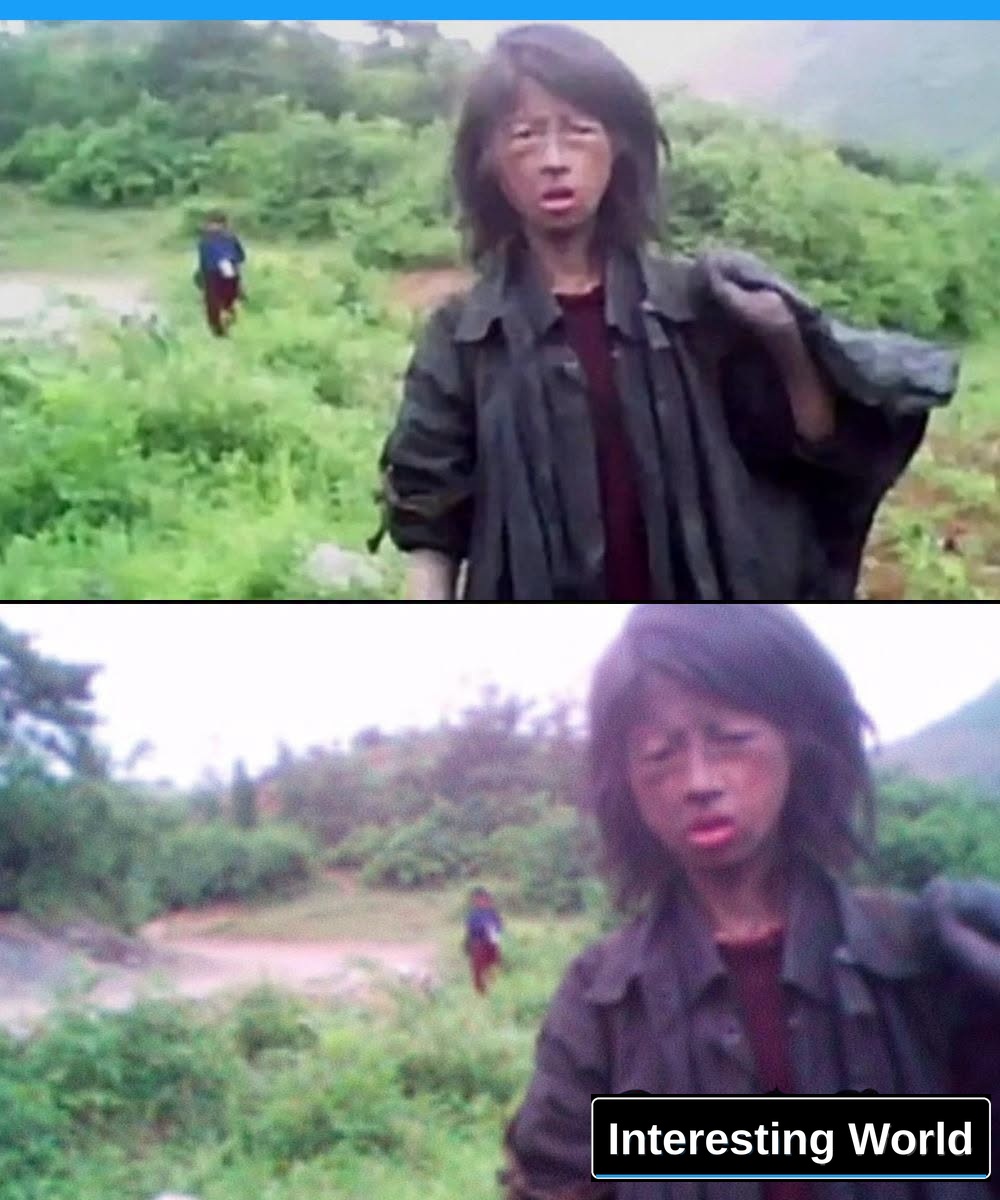
He was only 23 years old, but his life seemed to have taken away almost everything.
Category: Life Stories