Denise was 25 years old and could no longer be saved. But his heart could still save another person. That night a surgeon decided to transplant him into the chest of a man who was dying, and medicine was never the same again.
It is December 3, 1967.
At Groote Schuur Hospital in Cape Town, South Africa, two lives are about to cross in a way that until then no one had ever succeeded in turning into reality.
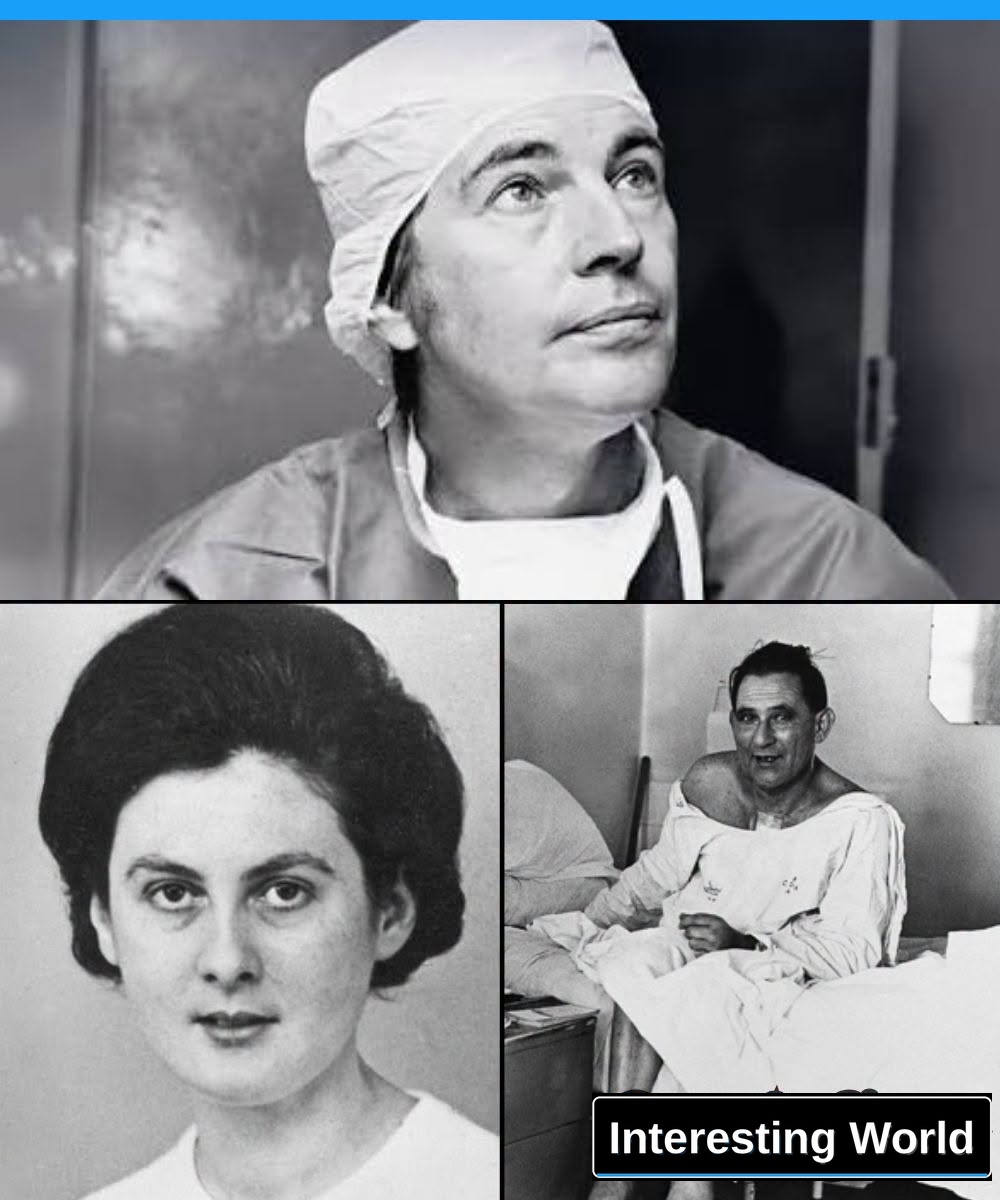
Louis Washkansky suffers from a severe heart failure.
His heart is failing.
The therapeutic possibilities are now reduced to a minimum and, without an alternative, its destiny appears marked.
Not far away is Denise Darvall.
She's just 25 years old and she's been victim of a road accident. The injuries suffered are irreversible, but his heart is still healthy enough to be transplanted.
It is at that time that surgeon Christiaan Barnard and his team decide to try something that will change the history of medicine.
Take Denise's heart and transplant it into Louis' body.
Today we know the heart transplant as an extreme but possible procedure.
In 1967 he jumped into the unknown.
The surgeons had already studied the technique for a long time, but there was a huge problem: even if they were able to perfectly replace the heart, the patient's immune system could recognize the new organ as a stranger and attack it.
There was then a less scientific and much older barrier.
For centuries the heart had been considered something more than an organ: the symbol of love, emotions, the identity of a person.
That night Barnard had to prove that a heart could leave a body and continue to support life in another.
The operation began.
Washkansky's sick heart was removed.
Denise came to his place.
Then the necessary connections were completed and the time came when it could turn working hours into a success or a failure.
The new heart had to work.
And it worked.
In Louis Washkansky's chest he began to beat the heart that until a few hours before he had beaten in Denise Darvall's body.
For the first time a heart transplant from one human to another had managed to keep the recipient alive.
Louis passed the surgery.
In the following days he managed to talk and see his family.
But medicine had just conquered a frontier and had already met another one.
To avoid the rejection of the new heart, it was necessary to weaken Washkansky's immune system.
This strongly reduced his defenses against infections.
Eighteen days after surgery, Louis died of pneumonia.
Just 18 days.
A result that, evaluated today without knowing the context, could seem a failure.
It wasn't.
Because the transplanted heart worked.
The operation had shown that what until then seemed almost impossible could be done.
Barnard continued on that road.
His second heart transplant patient, Philip Blaiberg, survived for over a year and a half.
In the following years, progress in surgical techniques and, above all, in drugs against rejection would radically transform the prospects of transplanted patients.
What in 1967 was an experiment at the borders of medicine would become a concrete possibility of survival for people with severe heart diseases.
But in the story of that night there is a name that deserves to be remembered together with that of Barnard.
Denise Darvall.
She was 25 years old and her life was suddenly broken.
His heart, however, continued to beat in the body of a stranger.
Louis only had 18 more days.
Yet those eighteen days were enough to show the world that a human heart could have a second life.
Since then medicine has learned to transform those days in years and, in many cases, in decades.
Everything began that night in Cape Town.
With a young woman who could no longer be saved, a man who was dying and a heart who, for the first time, managed to continue his story in another body.

Denise was 25 years old and could no longer be saved. But his heart could still save another person. That night a surgeo
Category: Life Stories