Charles Chaplin was now rich enough to guarantee his mother everything she missed most of her life.
But Hannah Chaplin had spent years marked by poverty and serious mental health problems.
In 1921 Charlie and his brother Sydney managed to transfer her from Britain to California. Hannah was set up in South Hollywood, where a couple took care of her.
There was no need to worry about the next day.
During an exit, Hannah purchased hundreds of meters of colored silk, spending thousands of dollars. Initially Charlie thought he'd give it back. Then he changed his mind.
She knew that her mother had spent most of her life wanting things she could never afford. He decided to leave her what he bought.
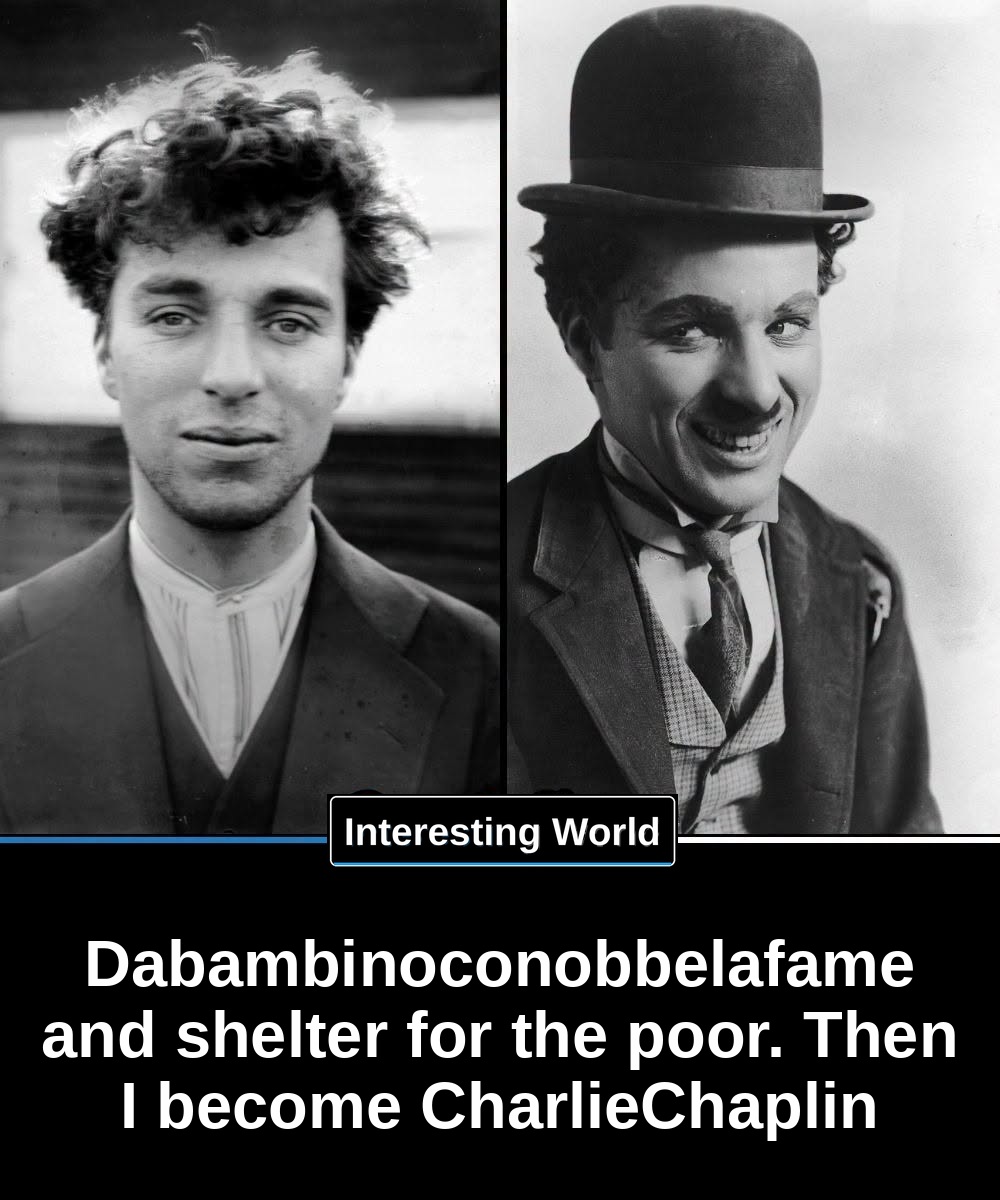
Because before becoming one of the most famous men in film, Charlie Chaplin was a very poor child.
Born in London in 1889, he grew up in a fragile family. The father, marked by alcoholism, soon came out of his life. Hannah tried to keep her children working as a tailor, while her health conditions worsened.
Charles and his brother also knew the experience of the hospice for the poor.
At five years Chaplin had already cast a stage. The job, for him, came long before the celebrity.
Then fate changed direction.
In 1913 he reached the United States and shortly thereafter entered the world of cinema. During a production he put together a costume destined to become immortal: too wide pants, tight jacket, huge shoes, bomb, stick and small mustache.
Charlot was born.
The world saw a wanderer capable of laughing without saying a word.
Chaplin, however, knew perfectly the universe from which that character came from.
Hunger.
The road.
Loneliness.
The distance between who owns everything and who has to invent every day a way to survive.
That's why his comedy was not just comedy.
Behind the falls and the gags continued poverty, exploitation, injustice and dignity. Chaplin transformed painful experiences into something that could be understood by viewers of different cultures and languages.
In 1940 he also used cinema to directly address totalitarianism with The Great Dictator.
Then he himself knew the price of political tensions.
In September 1952 he left the United States to travel to Europe. While he was already on his way, the American authorities revoked his return permit. Chaplin decided not to return and settled with his family in Switzerland.
He only returned 20 years later.
In 1972 he was awarded an honorary Oscar in Hollywood. In front of him the audience stood for an ovation lasting about twelve minutes.
The child who had known the hospice for the poor had become one of the fundamental figures of the history of cinema.
Chaplin died in his sleep on Christmas Day in 1977, at 88.
The success allowed him to offer his mother the economic security she had missed during Charlie's childhood. But those experiences were deeply linked to his personal history and art.
And maybe that's why Charlot keeps talking to the public after more than a century: under the bombshell and behind the laughter there was someone who had really known poverty and had transformed those experiences into cinematic art.

Charles Chaplin was now rich enough to guarantee his mother everything she missed most of her life.
Category: Life Stories