They told him he was wasting the land. Some trees would have taken 20 years to bear fruit. Antônio Vicente continued to plant anyway: someone, before him, planted the trees of which he himself had harvested the fruits.
It was 1973 when it acquired about 31 hectares of land degraded in the Serra da Mantiqueira, in the State of São Paulo, Brazil.
In that area the most predictable choice would have been to use the property for cattle.
Antônio did the opposite.
He wanted to bring back something that reminded him of his childhood and that he had gradually disappeared: the forest.
And together with the trees he hoped to bring back the water.
As a boy he had witnessed the gradual disappearance of vegetation and springs in the countryside. At the age of 14 he left rural life and in the following years he worked in the city, also as a blacksmith.
When he finally returned to the campaign, he started a project that would take decades of his life.
He collected seeds and preferred native species.
Much of the work was done manually, even with the help of some workers and animals used to transport what was needed through the soil.
Around him not everyone understood that choice.
A land could generate income through pasture and crops, while he filled it with trees that would need years before growing and, in some cases, produce fruits.
But Antônio was not only working for what that land could offer him in the immediate future.
With the passing of time, the landscape began to respond.
Over forty years he was estimated to have planted about 50,000 trees. The old degraded land gradually returned to cover vegetation and numerous sources reappeared in the area.
Then the animals came back.
Tucani, other birds, squirrels, pacas, opossums and several wild species began to frequent what was no longer like the land purchased in 1973.
He had become a small forest sanctuary.
The story of Antônio Vicente also tells a fundamental principle of environmental recovery: restoring the vegetation can help the soil to better retain water, protect the soil and recreate habitats in which the fauna can return to settle.
But to see these results really needs something that is often missing in the projects thought only for the short period: time.
Antônio began to plant knowing that some trees would take many years before giving fruits.
And yet he continued.
Because he also benefited from trees planted by someone else before his birth.
And this is perhaps the most powerful part of his choice.
In 1973 he looked at a degraded ground and not only saw what that land was.
He saw what could have become many decades later.
Then he took a seed and began.

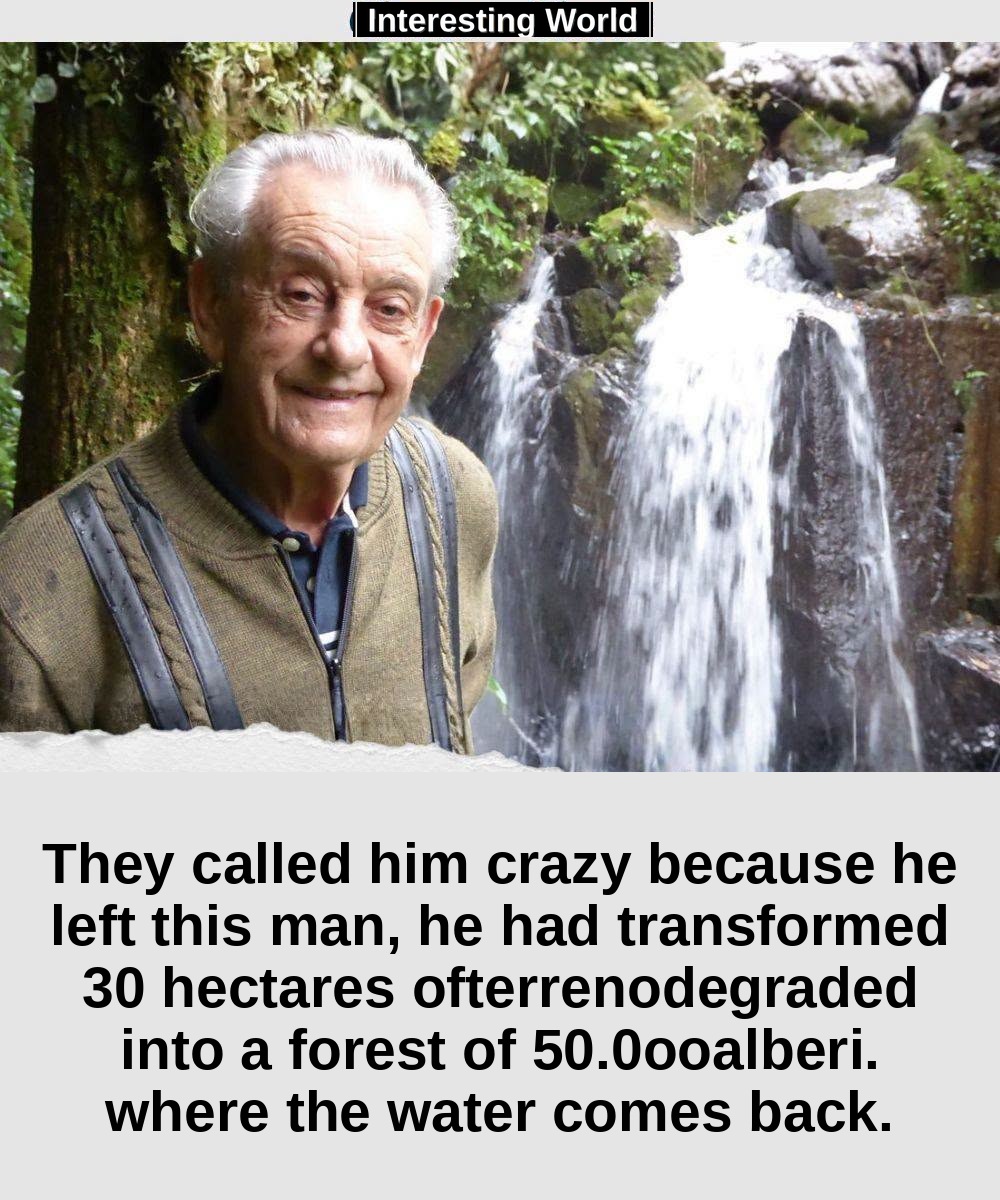
They told him he was wasting the land. Some trees would have taken 20 years to bear fruit. Antônio Vicente continued to
Category: Life Stories