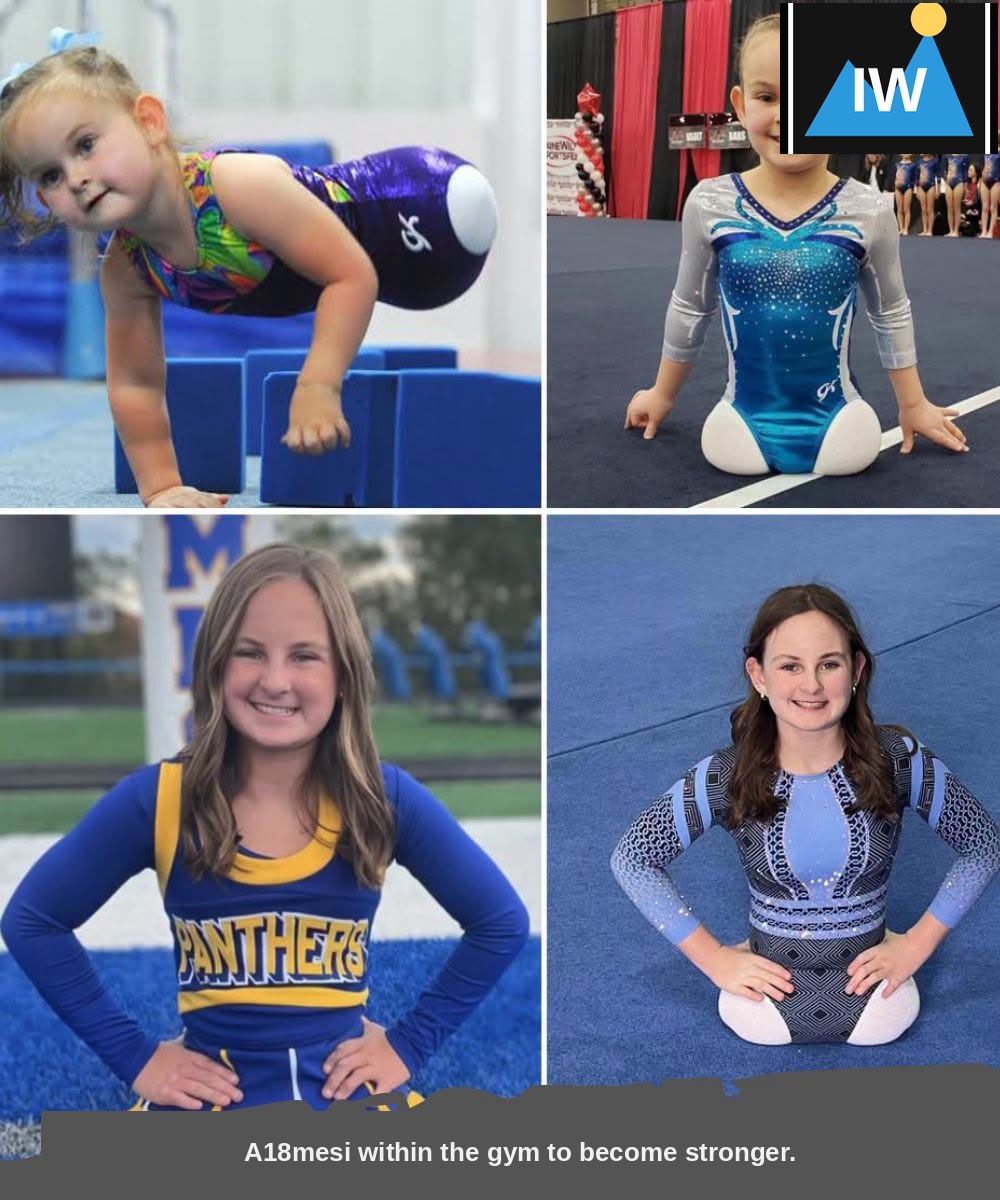
At 18 months he entered the gym to become stronger. Years later, that little girl would have forced the gymnastics world to watch sports from a different perspective.
Paige Calendine was born without legs. When her parents decided to approach her gymnastics, they were not thinking about competitions, trophies or medals. They wanted above all to strengthen the body and spend time with other children.
Then something happened that no one had planned: Paige fell in love with that sport.
Growing up in Zanesville, Ohio, he found himself in front of exercises designed for bodies very different from his. Bar, free body, jumps and rotations could not simply be performed in the same way as the other gymnasts.
So Paige learned to find her own way.
He did not just participate. He began to compete, arriving at state and national competitions and conquering medals and trophies.
But the most important result of his experience would come out of the charts.
In 2024 she was invited to Minneapolis, during the U.S. Olympic Gymnastics Trials, to take part in an event of Gymnastics for All. He performed with other athletes with disabilities and helped to show coaches a fundamental principle: an exercise can be adapted without taking value to sports or athlete who practice it.
In the same year his story became the subject of the documentary Built Different, while the videos of his performances reached millions of people online.
Behind those images, however, there was also a much more difficult reality.
With growth, practicing gymnastics became more and more painful. In 2025, at the age of 14, Paige made a complicated decision: leaving agonistic activity.
It didn't mean giving up sports.
He entered cheerleading, swimming, basketball and football. And above all he returned to the gym where he had spent many years, this time on the other side.
Today it helps to train children who are learning their first movements.
It is a passage that gives its history a particular meaning: the girl entering the gym to receive strength became a girl capable of transmitting to others what she learned.
And his next goal is not a podium.
Paige wants to be a pediatrician, because she loves working with children.
Maybe this is where his story goes beyond the medals. Paige didn't just prove how far a legless gymnast could be. His path helped to ask a much wider question: how many people could discover a sport, a talent or a passion if sports environments learned to adapt to different bodies?

At 18 months he entered the gym to become stronger. Years later, that little girl would have forced the gymnastics world
Category: Love & Relationships