
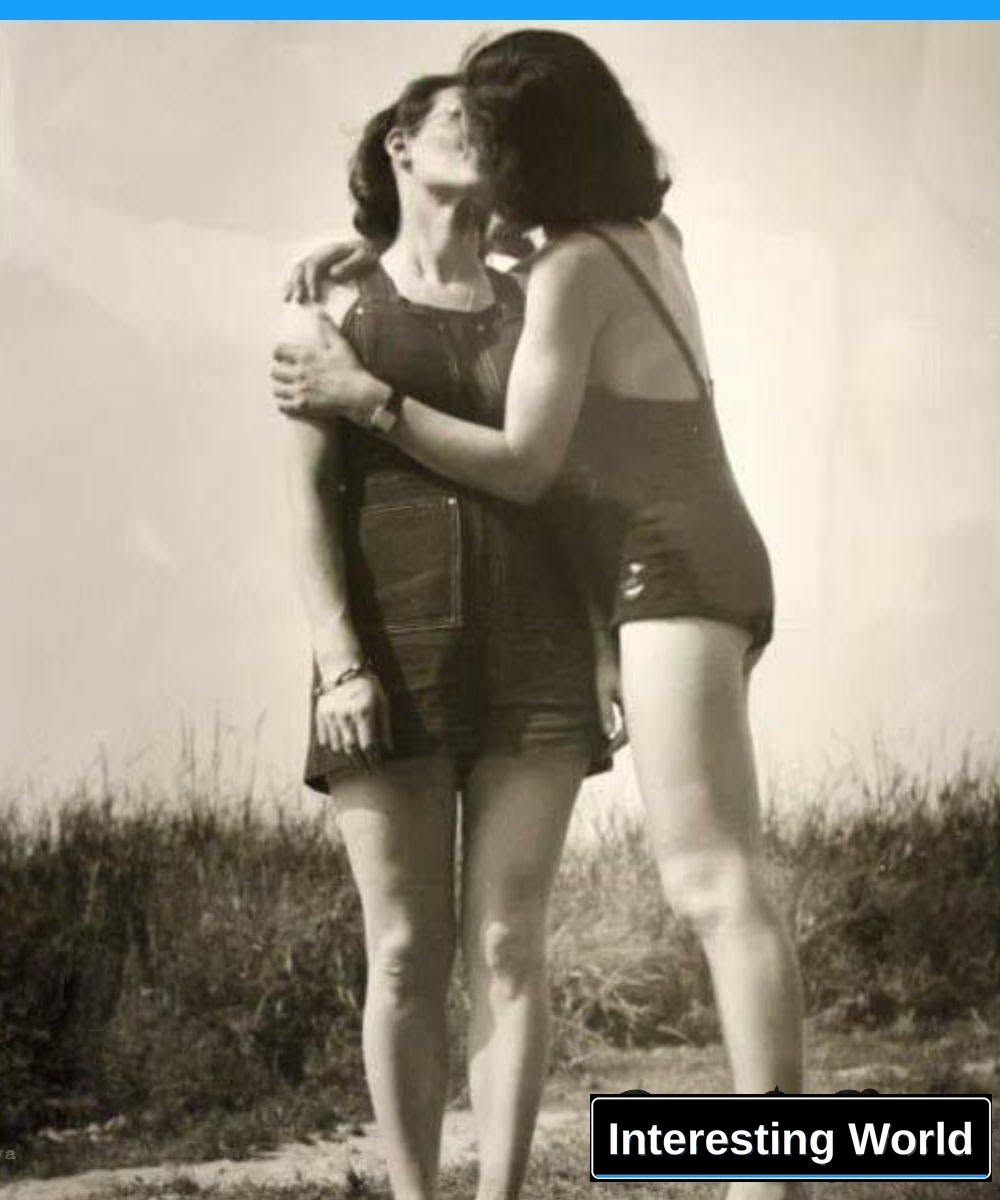
They took a picture smiling down the river. A few hours later, the Gestapo knocked at their door.
On August 21, 1944, it seemed like an ordinary day. Happy Schragenheim and Lilly Wust had spent a few hours cycling on the banks of the Havel in Berlin. They photographed each other, relaxed near the water and, at least for a few moments, managed to forget the war that was devouring the city.
Those images would become their last memory of freedom.
Their story was born almost two years earlier, when everything seemed to make it impossible.
Lilly was a German woman, mother of four children and wife of a Wehrmacht soldier. For years he had lived without open opposition to the Nazi regime and had even received the Cross of Honor of the German Mother, the recognition for women with numerous families.
Happy, however, was all that Nazism wanted to erase.
Jew, who remained orphaned as a child, managed to escape deportation by entering into hiding. He lived with false documents, continually changing shelter and every identity control could mean deportation to a concentration camp.
When they met in November 1942, something was born among them that went far beyond a simple clandestine love.
They were called with two special names: Aimée and Jaguar.
Aimée was Lilly, "the beloved." Jaguar was happy, forced to live on the run.
When Lilly discovered that Felice was Jewish, he did not abandon her. He made the most risky choice: he welcomed her into his home.
She separated from her husband and, in June 1943, the two women wrote a marriage contract all of them. No law would have ever recognized it, but for them those signatures and rings exchanged represented an authentic promise: choosing, remaining faithful and sharing life despite a regime that claimed to decide who had the right to love and even exist.
For over a year they managed to build a daily life made of letters, poems, flowers and small normal gestures. In a time dominated by fear, they stubbornly defended the possibility of living.
Then came that August 21, 1944.
On the return from the excursion they found the Gestapo agents waiting for them.
Felice was arrested. Lilly was questioned but released, probably also because she was the mother of four children and wife of a German military.
That same evening he began a diary with one prayer: he asked God to protect the woman who loved more than anything else.
He only managed to see Felice a few times before the deportation to Theresienstadt. He even tried to reach her, without success, and continued to send her packages with food and clothes in the hope that they would arrive.
Felice was later transferred to Auschwitz, then to the Gross-Rosen field system and Kurzbach subfield. During the winter 1945 evacuations, the trail was finally lost. It is believed that she died a few weeks before the end of the war.
Lilly never stopped waiting for her.
He kept photographs, letters, poems and that marriage contract written by them. In the last months of the regime he also hid other Jewish women, helping to save their lives.
In 1995, Yad Vashem recognized her as the Right between the Nations.
The photographs taken along the Havel have come together with the documents kept for decades and today allow to reconstruct a story that speaks not only of love, but also of courage.
In a time when Nazis tried to erase people, identities and affections, Aimée and Jaguar managed to leave a testimony that no persecution could destroy.
Those images don't just tell a summer of 1944.
They tell the strength of two women who decided to love each other even when it meant challenging one of the most brutal regimes in history.