When his daughter died before she was two years old, Dale Evans could have turned that pain into a private affair. He did the opposite: he told Robin to America at a time when many children with intellectual disabilities were still institutionalized and the social stigma was very strong.
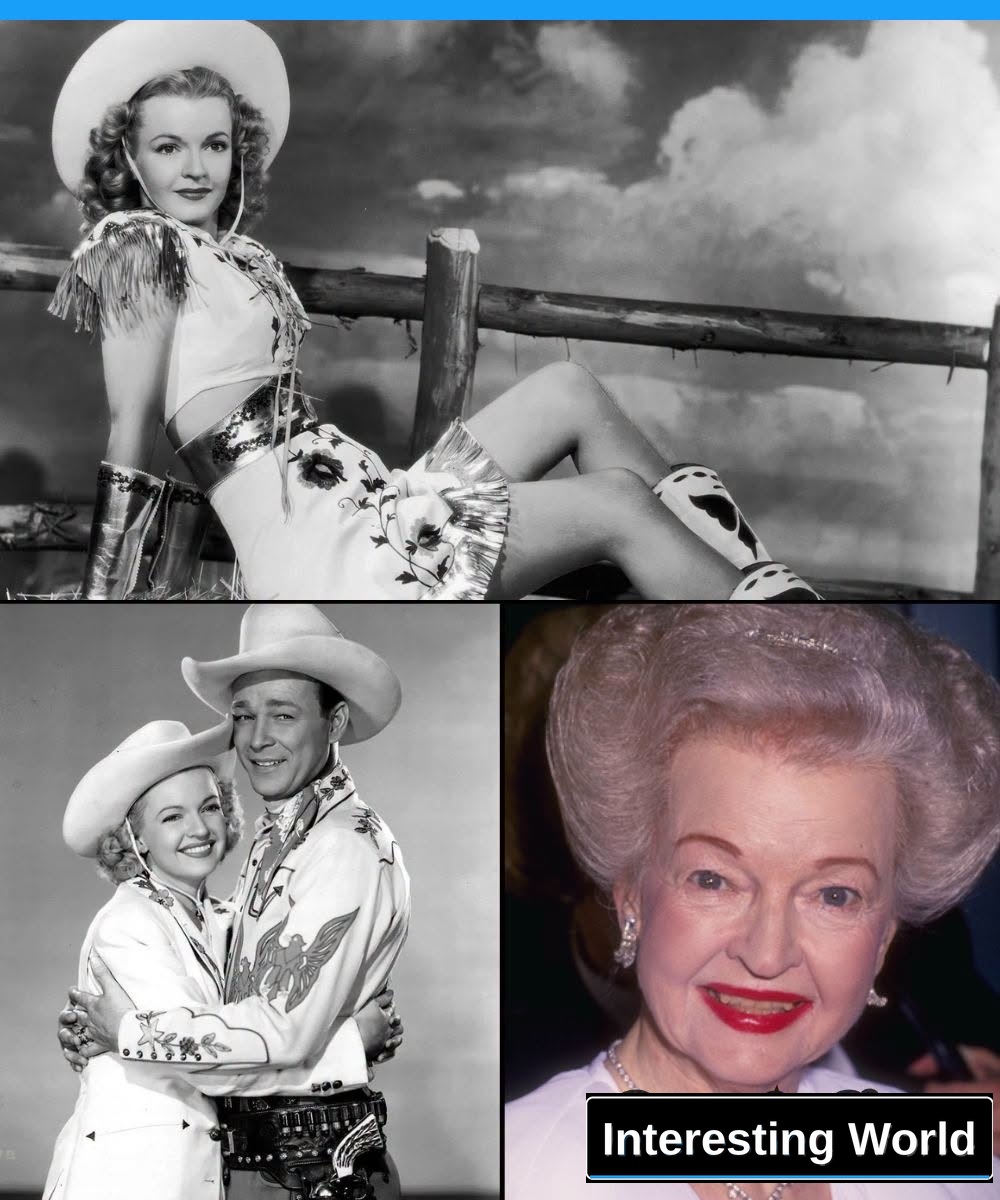
Before becoming one of the most popular women in western cinema, Dale Evans was named Frances Octavia Smith.
She was born in Texas and began to build a career through music, radio and small stages, until she arrived in Hollywood.
He met Roy Rogers there.
He was the famous “King of Cowboys”, she would become the “Queen of the West”.
Together they formed one of the most recognizable pairs of the American show.
But in 1950 their life changed for a reason that had nothing to do with cinema.
Their daughter Robin Elizabeth was born.
The girl had Down's syndrome and severe heart failure.
We must remember what all this meant in America of those years.
The intellectual disability was surrounded by a huge stigma. To many families the institutionalization of children with disabilities was presented as a normal solution, while openly speaking of their condition was much less common today.
Dale and Roy decided instead to raise Robin in the family.
They didn't want the diagnosis to become the only possible definition of their child.
They took her home.
They loved her.
For almost two years, Robin was part of the everyday life of one of America's most famous families.
Then the tragedy came.
In the summer of 1952, Robin became ill of parotis and, after complications, died a few days before his second birthday.
Dale found himself in front of a pain that no fame could make more bearable.
But he decided to write.
Angel Unaware was born.
It was an unusual and deeply personal book.
Dale imagined that it was the same Robin, from Paradise, to tell God the short period spent on Earth and what his presence meant for the family.
Instead of telling her daughter through fear or shame, she put her at the center of history.
And he did it publicly.
This is perhaps the most important aspect to understand today.
At a time when the institutionalization of people with intellectual disabilities was much more common and the social stigma was very strong, one of the most famous women in America used their notoriety to openly speak of a child with Down syndrome.
Angel Unaware reached a large audience.
The book helped to make known to many people a different way of talking about disability: through affection, dignity and family membership, instead of only through a diagnosis.
In the following years, Dale Evans continued to support children and people with disabilities.
His family would also grow through the adoption of other children from different stories and countries.
Yet the audience continued to know her especially as the woman next to Roy Rogers.
As an actress.
As a singer.
As an author of songs, including the famous Happy Trails.
But Robin's story shows another part of her legacy.
Dale had built his career thanks to his voice.
After his daughter's death he decided to use that same voice to tell something that America at the time was still struggling to look openly.
Robin lived less than two years.
He did not become adult, he did not have a career and could not personally tell his story.
Her mother did it for her.
And he transformed one of the most painful experiences of his life into a message that reached many people.
Sometimes a life does not need to be long to leave a mark.
Robin's was very short.
But through his mother's words he continued to speak long after his heart had stopped beating.

When his daughter died before she was two years old, Dale Evans could have turned that pain into a private affair. He di
Category: Life Stories