A honey produced in southern Chile could become something very different from a food: the basis of a material designed to help damaged skin heal.
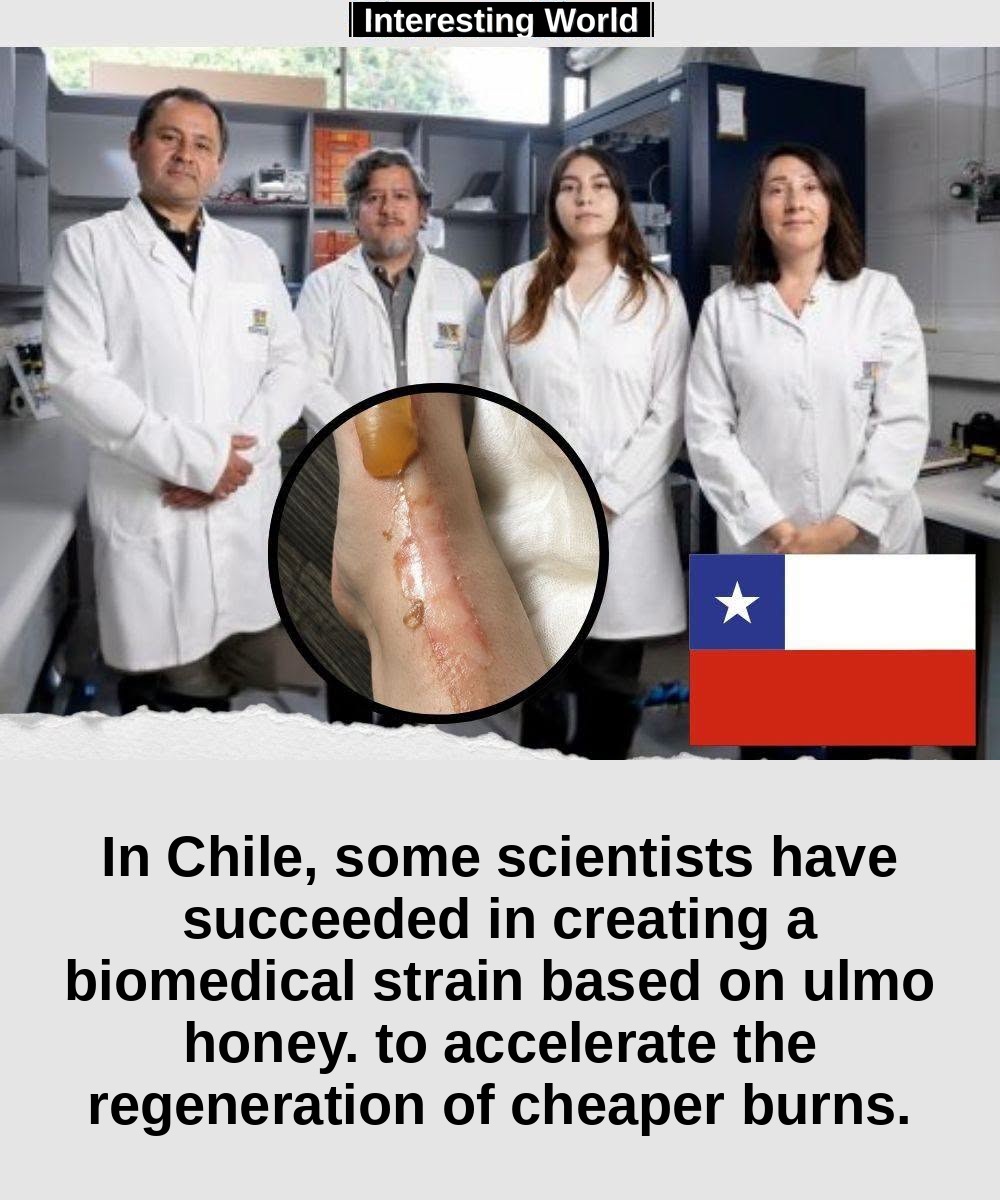
In Chile, a group of researchers of the Universidad Técnica Federico Santa María (USM) is developing a biomedical patch based on ulmo honey, a variety studied for its antimicrobial properties and its potential in scarring.
The interesting element is not only the presence of honey, but the way it is used.
Thanks to a technique called electrofilament, researchers have created a membrane composed of nanofibre of a biodegradable polymer in which ulmo honey is incorporated.
The structure is designed to be porous and three-dimensional and to create a favorable environment for the growth of cells involved in tissue regeneration.
The goal is to develop a material that can be used in the future in the treatment of difficult wounds to scarce and burns, while simultaneously exploiting the characteristics of the membrane and the antimicrobial properties of honey.
This is where research takes on a broader meaning.
A severe injury does not only require rebuilding the damaged tissue: it is also necessary to protect it while healing. Integrating a natural substance with interesting properties into a structure made through nanotechnology means joining a southern resource of Chile to advanced biomedical technologies.
The first laboratory experiments also showed promising results on the vitality of human fibroblasts, fundamental cells in tissue repair processes.
But the project is still experimental.
These results do not mean that the patch is already an approved therapy or that its effectiveness has been demonstrated in patients. Further verifications will be required and subsequently clinical trials.
The project also focuses on another important element: cost.
ulmo honey is much cheaper than mānuka honey used as a reference in some biomedical applications and research. The aim of the researchers is therefore to achieve an effective but also economically accessible solution for the treatment of skin lesions.
Sometimes innovation does not consist in creating a completely new substance.
It consists in finding a new and smarter way to use what nature had already made available.

A honey produced in southern Chile could become something very different from a food: the basis of a material designed t
Category: Life Stories