Hamdi Ulukaya had grown up in the east of Turkey, in a Kurdish family living in breeding and producing cheese and yogurt.
When, in 1994, he moved to the United States to study and learn the language, he had no major capital or a network of knowledge ready to help him.
The turn came in 2005.
Ulukaya saw the announcement of an old yogurt factory in the north of New York State. Kraft had just shut it down and the facility was on sale.
He tried to dissuade him. Investing in that establishment seemed a huge risk.
He did the opposite.
But he didn't have the $700,000 to buy it.
Two KeyBank officials then told him about a Small Business Administration program, the US Federal Agency that facilitates access to credit for small businesses.
Ulukaya prepared his first real business plan, personally invested part of the capital and offered a personal guarantee.
After about five months he managed to get a loan of about a million dollars: 700,000 served to buy the factory and the rest gave him the necessary resources to start putting it back on.
In August 2005, the old closed factory was officially its own.
From that moment he returned, in a way, to his origins. Starting from the memory of the boiled yogurt that her mother prepared in Turkey, she worked to perfect a version destined to the American market.
Chobani was born like that.
That factory, which was now part of the past, became the starting point of a company capable, in less than ten years, to reach a billion dollars of annual sales and to contribute to the transformation of the Greek yogurt market in the United States.
But one of the most significant passages in Ulukaya's history did not concern what he had gained.
It was about what he decided to share.
In April 2016, he reunited about 2,000 employees and announced a plan that would allocate their shares to around 10% of the company’s future value.
In case of sale or quotation on the Stock Exchange, the average potential value for each worker was estimated at the time around $150,000. For some of the older employees, the figure could have exceeded the million dollars.
The meaning of that choice was enclosed in the words spoken by Ulukaya before his workers:
“We worked together first. We're partners now. ”
It wasn't a completely isolated gesture from the rest of his story.
The previous year he had joined the Giving Pledge, committing most of his fortune to philanthropy. The question of refugees would become one of the central causes of his commitment, along with the choice to offer concrete opportunities for work to people forced to start over elsewhere.
And perhaps this is the aspect that makes his story different from the classic history of the entrepreneur started from scratch.
A closed factory can be seen as something that has exhausted its value. Ulukaya saw her as a place to start over.
And when that intuition became a billion-dollar venture, he decided that part of the built value should also belong to the people who had helped create it.
Because there is a profound difference between having employees and considering them part of their history.

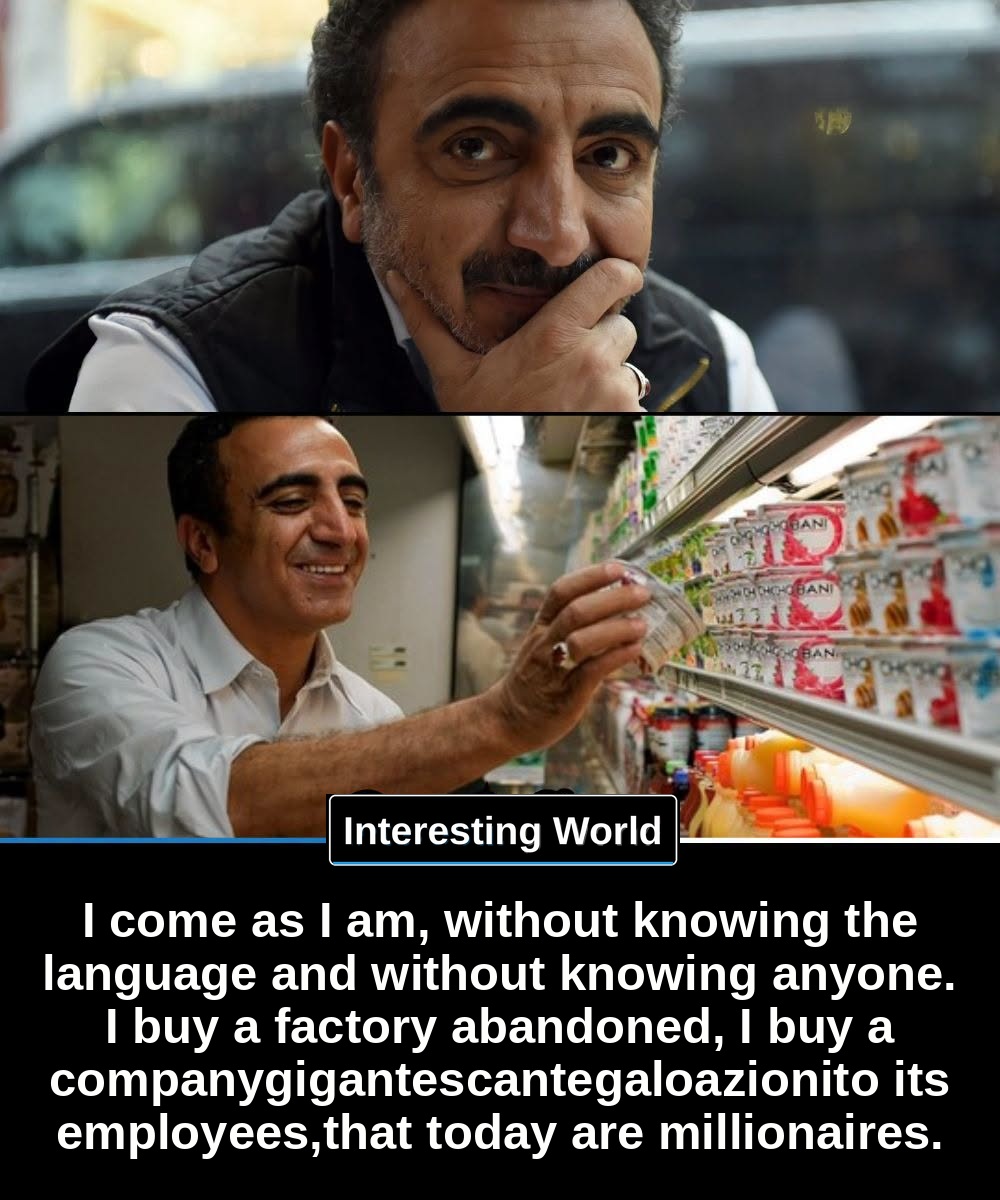
Hamdi Ulukaya had grown up in the east of Turkey, in a Kurdish family living in breeding and producing cheese and yogurt
Category: Life Stories