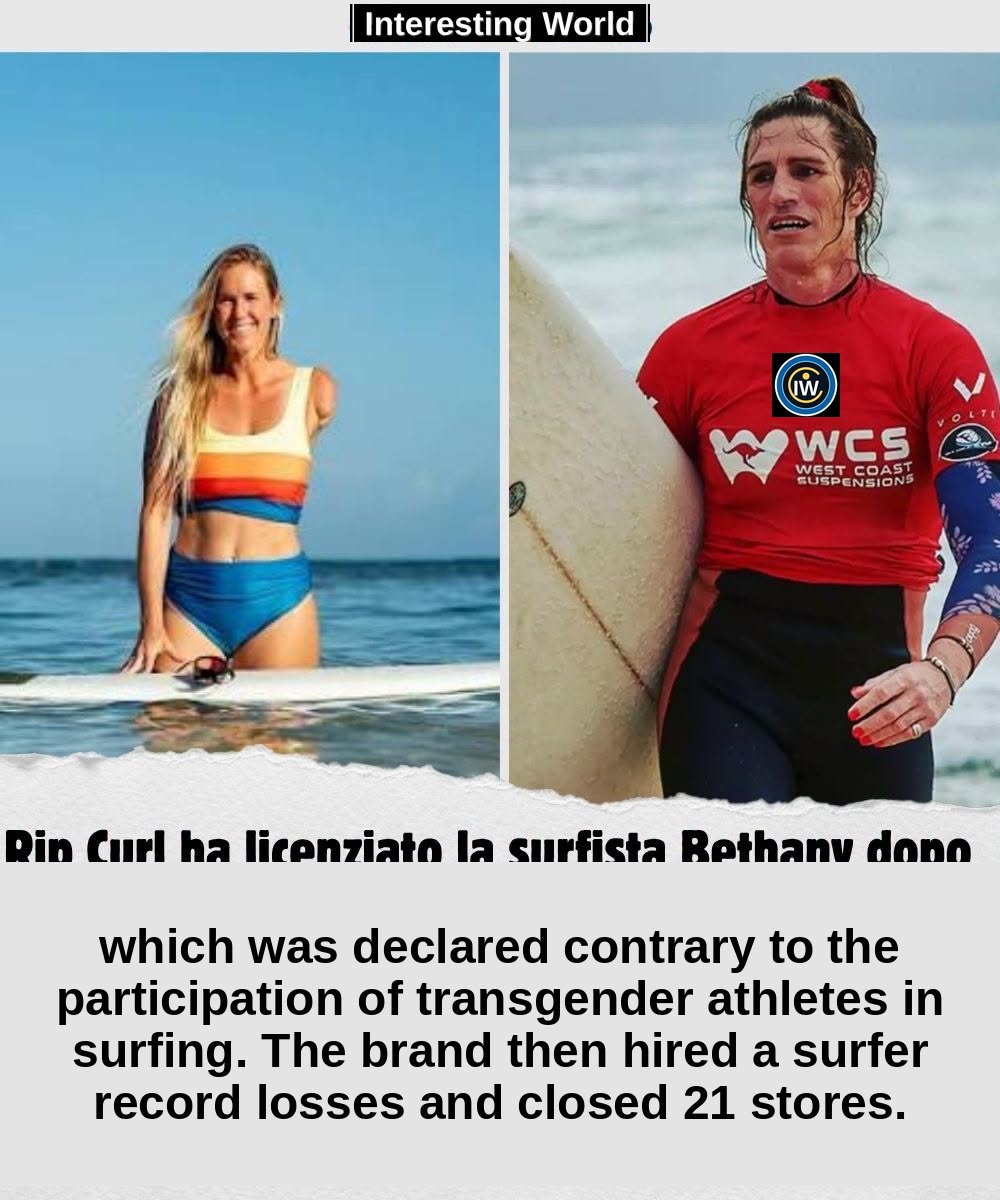
For 24 years Bethany Hamilton and Rip Curl have been one of the most recognizable ties of surfing. Then, in 2023, that collaboration came to an end.
The American surfer, who became famous all over the world after returning to the competitions despite the loss of an arm following the attack of a shark, had publicly expressed its opposition to the rules adopted by the World Surf League for the participation of transgender athletes in the female category.
In the same year he finished his sponsorship relationship with Rip Curl, which lasted over two decades and renewed in 2022 with a five-year contract that he had to continue for several years.
From that moment on, however, online began to circulate a much more clear reconstruction: according to numerous posts, the company would interrupt the relationship precisely because of the positions of Hamilton and, subsequently, would be punished by consumers with boycotts, closures of shops and a worsening of the economic results of the parent company KMD Brands.
The problem is that putting these events in sequence is not enough to show that they are connected.
The end of sponsorship is real, as well as the subsequent online negative reaction towards Rip Curl. But acknowledging the company's decision to Hamilton's statements would require a direct confirmation or documented evidence that demonstrates that cause and effect.
The same applies to any economic difficulties, restructuring or closures: to argue that they were provoked by the boycott born of the controversy they serve data that demonstrate that relationship of cause and effect.
This is the detail that makes the story interesting.
In the social era, two facts really happened can be linked up to become a seemingly undeniable story.
But between saying that something happened after another thing and showing that it happened because of that thing there is a fundamental difference.
And it is often there that a viral history stops being only chronic and begins to need verification.

For 24 years Bethany Hamilton and Rip Curl have been one of the most recognizable ties of surfing. Then, in 2023, that c
Category: Life Stories