Douglas Tompkins spent the first part of his life building companies. The second, trying to return to nature something much bigger.
In the 1960s, he was one of the founders of The North Face, originally born as an activity dedicated to outdoor activities.
After leaving the company, along with his wife Susie, he contributed to the growth of Esprit, destined to become an international fashion brand.
He had achieved what for many represented success: companies known all over the world and a great personal fortune.
But in the late 1980s, his priorities changed radically.
Tompkins began to move away from business and question the impact of consumerism and industrial production on the environment. He gradually sold his own holdings and chose Patagonia as the center of his new existence.
This time the money would have served to buy something that did not want to possess forever: the land.
It acquired huge territory extensions between Chile and Argentina with the aim of protecting forests, rivers, wetlands, mountains and threatened habitats.
The strategy was not simply to shut down land behind a fence.
With Kristine McDivitt Tompkins, her second wife and former Patagonia delegate, she started conservation and ecological restoration projects. In several areas, farm-related infrastructures were eliminated, recovered habitats and developed programs to promote the return of native fauna.
At first not all welcomed positively those immense private acquisitions of territory.
But the aim of the Tompkins was to transform those properties into protected areas and, through agreements with the States, contribute to the creation or extension of national parks.
Douglas did not see the completion of the entire project.
In December 2015, he was kayaking on Lake General Carrera, Chilean Patagonia, when weather conditions caused the tipping of the kayak. He died for hypothermia. She was 72.
Kristine continued her work.
In the following years, their organizations have contributed to the protection of vast natural areas in Chile and Argentina and to the creation or extension of several parks, including Pumalín Douglas Tompkins, Patagonia and Iberá.
The total size of their work is measured in hundreds of thousands of hectares for conservation.
But perhaps the most interesting paradox of Douglas Tompkins' life is another.
As a young man he had built part of his fortune selling products for those who wanted to explore nature.
Ten years later he used that same fortune to try to ensure that a part of that nature remained there, ready to be explored.
He didn't want to leave companies with his name.
He chose to leave forests, rivers and mountains that could continue to exist without him.

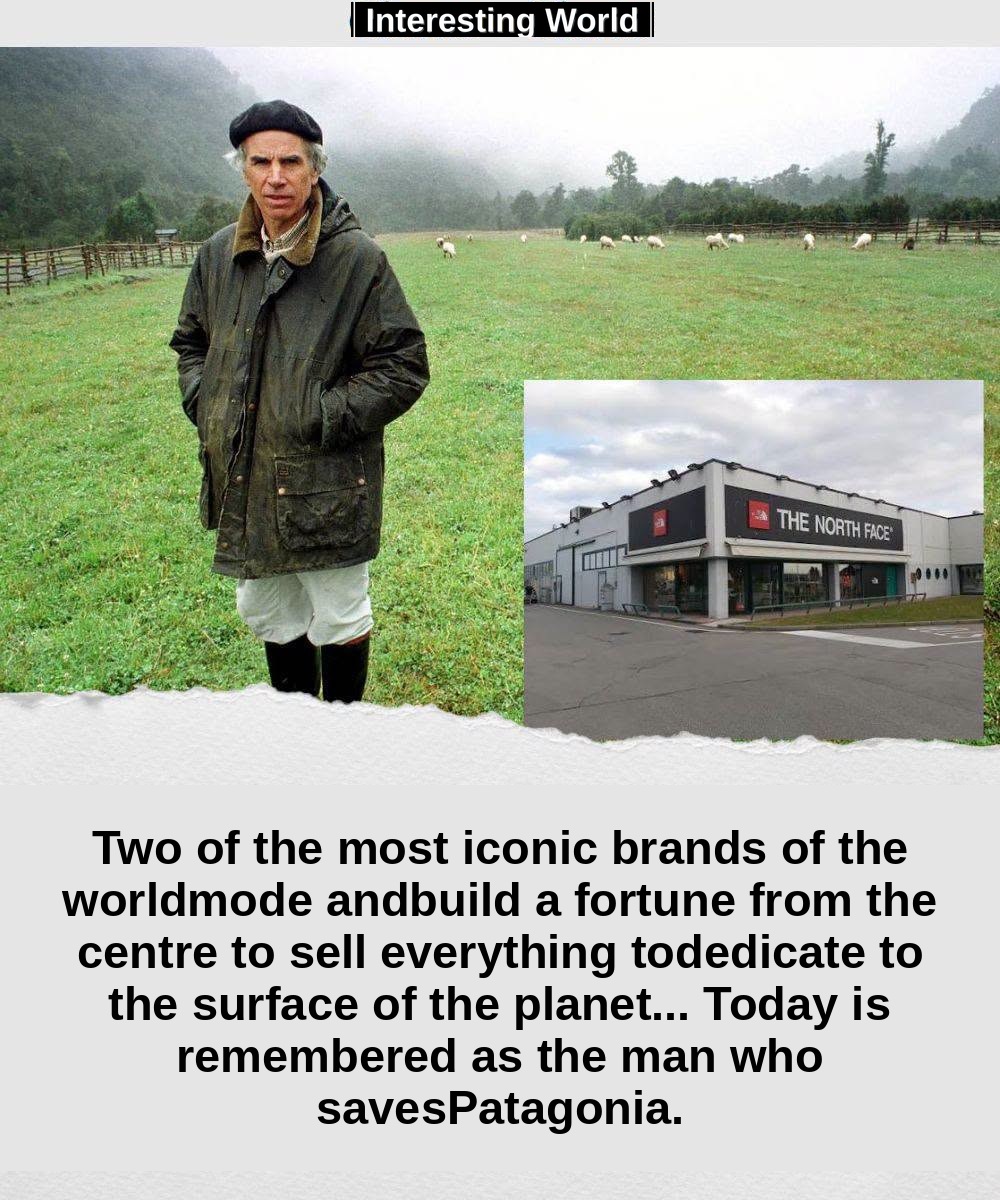
Douglas Tompkins spent the first part of his life building companies. The second, trying to return to nature something m
Category: Life Stories