To save 83 Jewish children, a French nun had to learn to lie. And before he did, he asked his archbishop if he was morally right.
The answer he received was brief: “We lie, my daughter,”.
It was 1942.
Sister Denise Bergon was 30 years old and was superior to the monastery of Notre-Dame de Massip, in the southwest of France. While persecution against the Jews intensified, some children began to arrive to her in search of a place where they disappeared.
Denise had already received some of them pretending they were normal Catholic pupils.
But soon he realized that protecting many more would require something different from simple courage: they needed false identity, silences, credible stories and a network of people who could not betray the secret.
This is why he secretly wrote to the Archbishop of Toulouse Jules-Géraud Saliège, one of the French religious who had publicly expressed themselves against the persecution of Jews.
With his support, the convent became a refuge.
83 Jewish children were finally hidden.
Only very few people within the structure knew all the truth. Other religious were told that those children were simply war refugees from other areas.
But there was a huge problem.
Many of them did not know Catholic prayers, they did not know how to behave during Mass and could betray themselves with a wrong gesture.
Sister Denise found a simple explanation: he said they came from communist families strongly opposed to religion.
So when a child did not know how to make a sign of the cross or made a mistake during a function, no one was surprised.
The danger remained constant for months.
During the search, Denise tried to keep calm while some children were hiding in the basement of the convent.
At night he also dealt with the goods that his parents had entrusted to their children: money, jewelry and documents were hidden so that they would not fall into the wrong hands.
He also kept memory of the true identities of children, hoping that one day they could find their families.
The operation lasted about twenty months.
And when the war ended, the result was extraordinary: all the 83 children who had been hidden in Massip had survived.
But for Denise saving them didn't just mean keeping them alive.
When the surviving relatives returned to search for them, he also returned the money and valuables that had been entrusted to them. For those who had no one, he sought relatives and safe accommodations abroad.
He never turned that story into a quest for notoriety.
He remained tied to the convent and died in 2006, at 94.
Many years later, some of the children he had protected returned to find her now elderly.
They didn't come alone.
They brought children and grandchildren.
And it is perhaps there that we really measure what happened in that convent: not only in the 83 lives saved during the war, but in all those come after.
Entire generations that exist also because, at the most dangerous moment, a woman decided that protecting a life could be more important than telling the truth.

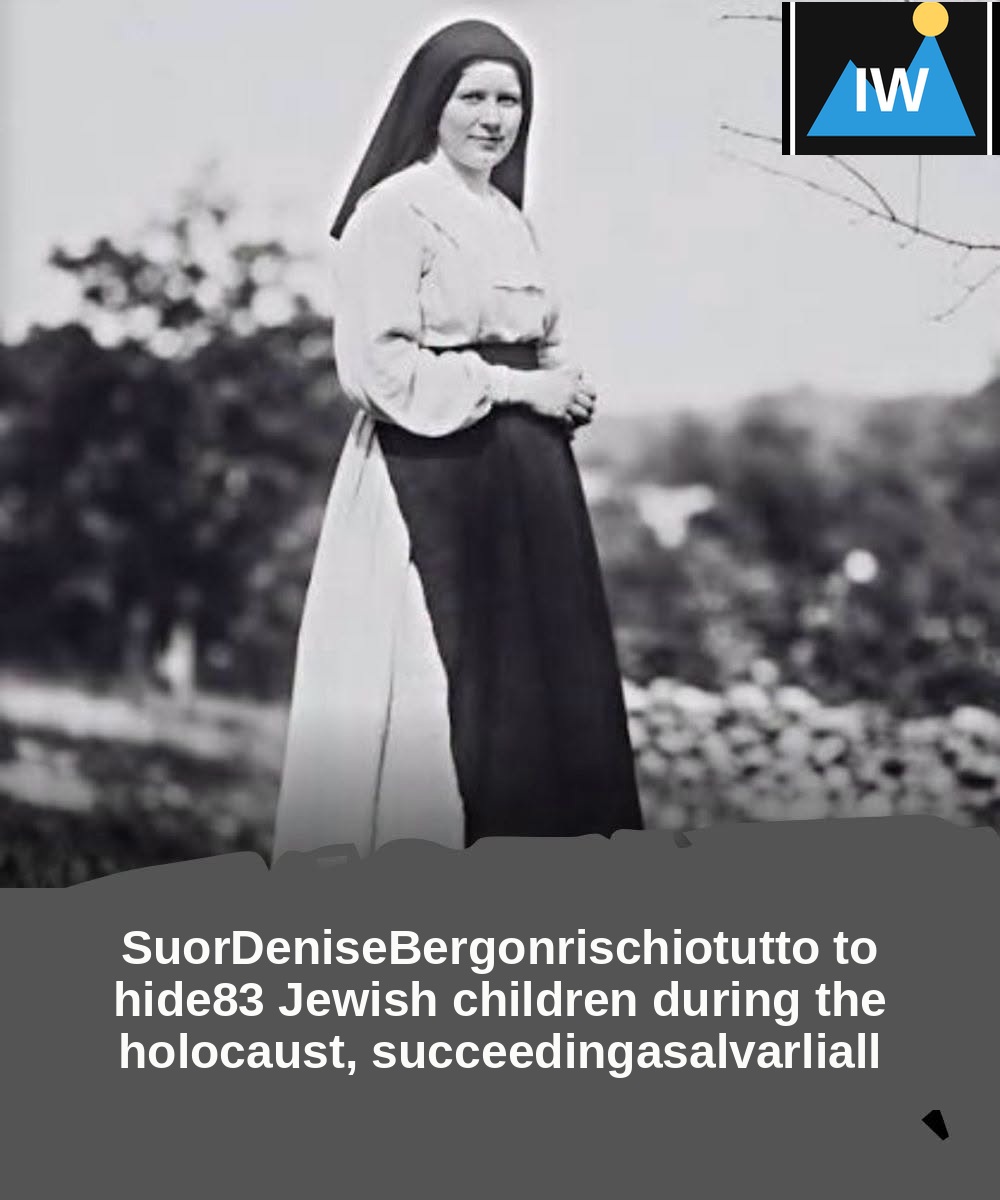
To save 83 Jewish children, a French nun had to learn to lie. And before he did, he asked his archbishop if he was moral
Category: Love & Relationships